
Many families become worried when a loved one with dementia begins eating less, refuses meals, or seems to lose interest in food altogether. It’s natural to wonder why people with dementia stop eating and whether they’re simply giving up, being stubborn, or no longer feeling hungry. In most cases, however, these changes are not intentional. They are often the result of dementia gradually damaging the parts of the brain responsible for recognizing food, coordinating movement, swallowing safely, and communicating basic needs.
As dementia progresses, the brain may struggle to recognize food, remember how to use utensils, coordinate chewing and swallowing, sense hunger or thirst, or even understand that it’s time to eat. According to the National Institute on Aging (NIA) and the Alzheimer’s Association, changes in eating and swallowing are common as dementia advances and can significantly affect a person’s nutrition, comfort, and overall quality of life.
Understanding why eating becomes difficult can help families replace fear and frustration with compassion. Eating difficulties are among the most common changes families notice during the later stages of Alzheimer’s disease and other forms of dementia. Recognizing these changes can make it easier to understand what’s happening, know when to seek medical advice, and determine when additional support such as speech therapy, home health care, or hospice may help improve comfort and safety.
Quick Answer
People with dementia often stop eating because the disease gradually damages the areas of the brain responsible for recognizing food, coordinating chewing and swallowing, sensing hunger and thirst, and controlling the complex movements required to eat safely. As dementia progresses, eating may become confusing, exhausting, or physically difficult, even when a person still has an appetite. According to the National Institute on Aging and the Alzheimer’s Association, these changes are a common part of advanced dementia and are usually caused by the progression of the disease rather than a conscious decision to stop eating.
How Dementia Affects Eating
Most people don’t realize that eating is one of the most complex activities the brain performs. Although it may seem automatic, eating requires multiple areas of the brain to work together in perfect coordination. From recognizing food on a plate to swallowing safely, dozens of brain functions must occur in the correct sequence.
To eat safely, the brain must be able to:
- Recognize that the food is edible.
- Remember how to use utensils or pick up food.
- Coordinate hand and arm movements.
- Move food around the mouth with the tongue.
- Control the muscles used for chewing.
- Coordinate the swallowing reflex.
- Protect the airway so food enters the esophagus instead of the lungs.
- Recognize feelings of hunger and thirst.
- Know when the body has had enough to eat.
Damage to these brain networks can make any step in this process more difficult or stop it from working properly.
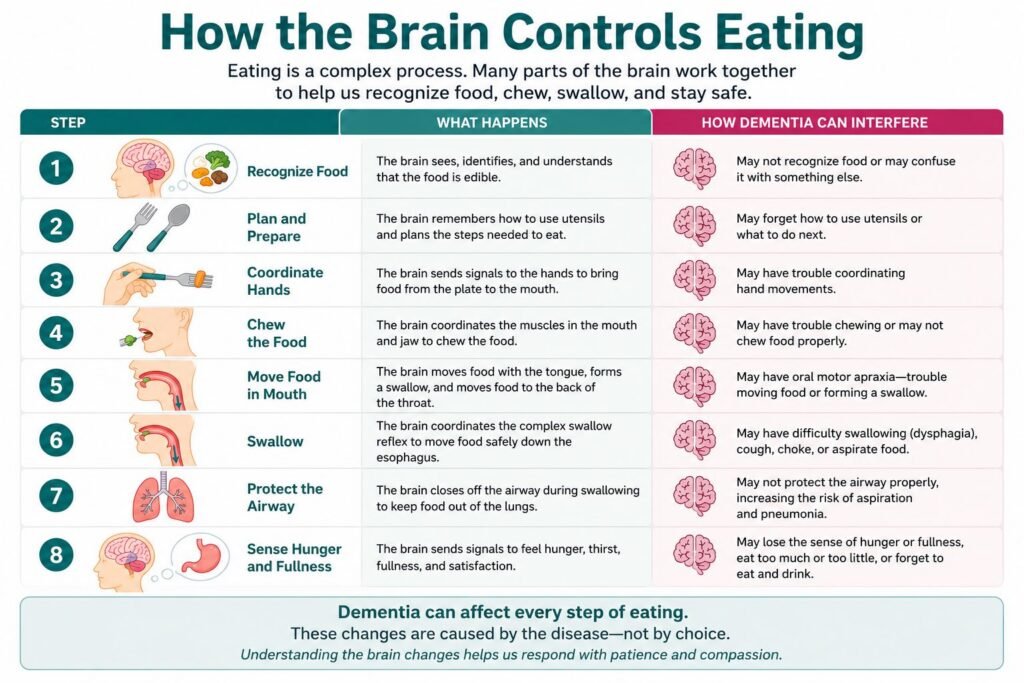
As dementia progresses, it gradually damages the brain networks responsible for these functions. A person may forget how to use a fork, fail to recognize food, have difficulty chewing or swallowing, or lose the ability to sense hunger altogether. Because different parts of the brain are affected at different times, eating problems often develop gradually and vary from person to person.
Understanding that eating difficulties are caused by changes in the brain—not a lack of effort or a desire to stop eating—can help families respond with greater patience, reduce frustration during mealtimes, and make informed decisions about their loved one’s care.
Related: If you’re interested in learning more about how dementia affects movement, communication, and other everyday abilities, read our article How Dementia Changes the Brain: Why Walking, Eating, and Communication Become Difficult.
Why People with Dementia Stop Eating
There isn’t usually a single reason why someone with dementia stops eating. Instead, several changes in the brain can gradually make eating more confusing, physically difficult, or less enjoyable. Some people experience only one or two of these changes, while others develop several as the disease progresses.
They May No Longer Recognize Food
One of the earliest challenges is that the brain may no longer recognize food the way it once did. A person with dementia may look at a meal without understanding that it is something to eat or may not recognize familiar foods they’ve enjoyed for years.
Some people also have difficulty distinguishing between different objects. For example, they may mistake mashed potatoes for something inedible or become confused about what belongs on the plate. Foods with unfamiliar textures, colors, or presentations can become especially confusing.
This loss of recognition is caused by changes in the brain’s ability to process and interpret visual information, and not because the person is choosing not to eat.
They Forget How to Eat
Eating requires a series of learned movements that most of us perform without thinking. Dementia can interfere with these automatic skills, a condition sometimes called apraxia, which affects a person’s ability to carry out familiar tasks even though their muscles may still function normally.
Someone experiencing apraxia may:
- Hold utensils incorrectly.
- Forget how to use a fork or spoon.
- Stare at the food without beginning to eat.
- Need gentle reminders for each step of the meal.
- Forget what to do after taking a bite.
Families often assume their loved one is refusing to eat when, in reality, they may simply no longer remember the sequence of actions involved.

They Lose Their Sense of Hunger or Thirst
As dementia affects additional areas of the brain, normal signals for hunger and thirst may become weaker or disappear altogether. A person may go for hours without asking for food or water because their brain no longer recognizes these basic physical needs.
Family members often say things like:
“She never tells me she’s hungry anymore.”
or
“If I don’t remind him to drink, he won’t drink anything all day.”
Even though the body still needs nourishment and hydration, the brain may no longer recognize or communicate those needs effectively. Reduced thirst can also increase the risk of dehydration, which may contribute to confusion, weakness, urinary tract infections, and hospitalization if not recognized early.
They May Not Be Able to Communicate Hunger
As dementia progresses, many people gradually lose the ability to communicate their basic needs. Even if they feel hungry or thirsty, they may no longer be able to find the right words to ask for food or explain that they want something to eat or drink. Instead, they may remain quiet, appear withdrawn, or simply turn away from meals.
In some cases, a person may become restless, agitated, or irritable because they’re hungry but cannot express what they need. Others may forget they haven’t eaten or fail to recognize the feeling of hunger altogether. Caregivers may mistakenly assume their loved one isn’t interested in food, when in reality they can no longer communicate what they need.
Rather than waiting for your loved one to ask for food or water, it often helps to offer meals, snacks, and fluids on a regular schedule throughout the day. Gentle reminders, simple choices, and patient encouragement can also make eating easier while reducing frustration for both the person living with dementia and their caregiver.
Taste and Smell Can Change
Dementia can also affect the senses of taste and smell, making foods seem bland, unfamiliar, or unpleasant. Meals that were once favorites may suddenly lose their appeal.
Some people begin preferring sweeter foods because sweet flavors often remain easier to detect as these senses decline. Others gradually lose interest in eating because food no longer provides the same enjoyment it once did.
These changes can contribute to reduced food intake, weight loss, and poor nutrition over time.
It’s also important to remember that dementia isn’t always the only cause of changes in taste. Medications, dry mouth, dental problems, mouth infections, and other medical conditions can also affect how food tastes. If your loved one suddenly loses interest in eating or experiences a noticeable change in taste or smell, discuss these symptoms with their healthcare provider to determine whether another treatable condition may be contributing.
Chewing Becomes Difficult
Chewing may become challenging even when the jaw muscles remain relatively strong. Instead of a muscle problem, the brain has difficulty coordinating the precise movements needed to chew food effectively.
Healthcare professionals sometimes refer to this as oral motor apraxia, meaning the brain struggles to direct the mouth, tongue, and jaw through familiar movements.
A person may:
- Hold food in their mouth without chewing.
- Chew very slowly.
- Stop chewing before the food is ready to swallow.
- Move food around the mouth without making progress.
This can make meals much longer and increase the risk of choking if food is swallowed before it has been chewed properly.
Swallowing Becomes Difficult (Dysphagia)
Difficulty swallowing, known medically as dysphagia, is one of the most common eating problems in advanced dementia. Swallowing is an incredibly complex reflex involving dozens of muscles and several areas of the brain working together within seconds.
As dementia progresses, these brain pathways can become damaged, making swallowing slower, less coordinated, and less safe.
Signs of dysphagia may include:
- Taking a long time to swallow.
- Coughing during or after meals.
- Choking while eating or drinking.
- Clearing the throat frequently.
- Pocketing food inside the cheeks.
- Drooling or food falling from the mouth.
- A wet or gurgling voice after swallowing.
When food or liquid enters the airway instead of the esophagus, it is called aspiration. Aspiration can sometimes occur without obvious coughing, a condition known as silent aspiration, making it especially difficult for families to recognize.
Repeated aspiration increases the risk of aspiration pneumonia, a serious lung infection that is common in advanced dementia.
Because swallowing difficulties can significantly affect nutrition and safety, healthcare providers often recommend an evaluation by a speech-language pathologist, who specializes in swallowing disorders. In later stages of dementia, families may also be encouraged to discuss goals of care, including whether hospice services could provide additional support focused on comfort and quality of life.
They Become Easily Distracted During Meals
People with dementia often find it difficult to concentrate, especially in stimulating environments. A television playing in the background, several conversations at the table, or frequent movement around the room may make it hard to focus on eating.
Even having too many food choices on the plate can feel overwhelming.
Creating a calm, quiet environment with fewer distractions often makes mealtimes less stressful and may encourage better food intake.
Fatigue Makes Meals Difficult
Eating requires far more physical and mental effort than many people realize. By the later stages of dementia, simply sitting upright, chewing, swallowing, and staying focused throughout a meal can become exhausting.
Some people become too tired to finish an entire meal, even when they still enjoy the food. Offering smaller meals or nutritious snacks throughout the day may be easier than expecting three large meals.
Depression or Another Medical Condition May Also Play a Role
Not every change in eating is caused by dementia itself. A sudden loss of appetite or rapid decline should always be discussed with a healthcare provider because another medical problem may be contributing. Possible causes include:
- Urinary tract infections or other infections.
- Constipation.
- Medication side effects.
- Depression.
- Mouth pain or dental problems.
- Poorly fitting dentures.
- Nausea or other digestive conditions.
Treating these underlying issues may improve eating and prevent unnecessary weight loss. If a person with dementia suddenly refuses food or experiences an abrupt change in appetite, it’s important not to assume the disease is solely responsible until other medical causes have been evaluated.
What Is Food Pocketing?
One of the more concerning eating behaviors families may notice is food pocketing, which occurs when a person keeps food inside their cheeks or under their tongue instead of chewing and swallowing it. They may appear to have finished eating, only for a caregiver to discover food still in their mouth several minutes later.
Food pocketing is common in the later stages of dementia and is usually caused by changes in the brain rather than a deliberate choice. As dementia progresses, the brain may have difficulty coordinating the complex movements needed to chew food, move it to the back of the mouth, and trigger the swallowing reflex. Some people simply forget that food is still in their mouth, while others are no longer able to recognize when they should swallow.
Signs that someone may be pocketing food include:
- Food remaining in the cheeks after meals.
- Holding food in the mouth without chewing.
- Taking an unusually long time to finish a meal.
- Refusing another bite while food is still in the mouth.
- Spitting food out unexpectedly.
Food pocketing can increase the risk of choking, especially if food is accidentally inhaled into the airway. It can also contribute to aspiration, poor nutrition, dehydration, and dental problems if food remains in the mouth for extended periods.
If you notice your loved one pocketing food frequently, it’s important to let their healthcare provider know. A speech-language pathologist can evaluate swallowing function and recommend strategies to make eating safer, such as modifying food textures, changing positioning during meals, or using specific swallowing techniques.
Above all, avoid trying to rush or force your loved one to swallow. Gentle reminders, patience, and close supervision during meals are usually much safer than repeated prompting or placing additional food in the mouth before the previous bite has been swallowed.
Did You Know? Food pocketing is often a sign that dementia is affecting the brain’s ability to coordinate chewing and swallowing—not that your loved one is being difficult or refusing to cooperate. Understanding this can help make mealtimes less stressful for both caregivers and the person living with dementia.
Should Families Force Someone with Dementia to Eat?
Watching a loved one refuse food can be heartbreaking. Many families worry that if they don’t encourage one more bite, their loved one will become weaker or starve. While these feelings are completely understandable, forcing someone with dementia to eat is generally not recommended.
As dementia progresses, eating often becomes confusing, tiring, or physically difficult because of changes in the brain, not because the person is choosing not to eat. Pressuring, rushing, or forcing someone to eat can increase anxiety, create resistance, and may even raise the risk of choking if they are having difficulty swallowing.
Instead of focusing on how much food is eaten at each meal, try to make mealtimes as calm, comfortable, and enjoyable as possible.
Ways to Encourage Eating
While you can’t reverse the changes caused by dementia, these strategies may help encourage eating and improve comfort:
- Offer favorite foods. Familiar foods and flavors are often more appealing than introducing new meals.
- Serve smaller, more frequent meals. Several small meals or nutritious snacks throughout the day may be easier than three large meals.
- Reduce distractions. Turn off the television, limit background noise, and create a calm eating environment.
- Allow plenty of time. Many people with dementia need extra time to chew, swallow, and finish a meal without feeling rushed.
- Provide gentle encouragement. Simple verbal cues or demonstrating how to take the next bite can be more helpful than repeated reminders or pressure.
- Follow swallowing recommendations. If a speech-language pathologist has recommended specific food textures, thickened liquids, or eating techniques, follow those guidelines to help reduce the risk of choking.
Watch for Signs of Distress
Pay close attention to signs that eating has become physically difficult or uncomfortable. Contact your loved one’s healthcare provider if you notice:
- Frequent coughing or choking during meals.
- Food remaining in the mouth after swallowing.
- Pain while eating.
- Repeated refusal to swallow.
- Rapid weight loss or signs of dehydration.
These symptoms may indicate that swallowing has become more difficult and that additional evaluation or changes to the care plan are needed.
Ultimately, the goal is not to force every bite but to help your loved one eat as safely and comfortably as possible. As dementia advances, healthcare providers often shift the focus from maintaining calorie intake at all costs to preserving comfort, dignity, and quality of life while supporting the individual’s nutritional needs as much as possible.
Should Someone with Advanced Dementia Get a Feeding Tube?
When someone with advanced dementia begins eating very little or develops significant swallowing difficulties, families often wonder whether a feeding tube is the best way to provide nutrition. This is an emotional decision, and it’s natural to hope that a feeding tube will help a loved one regain strength, prevent complications, or extend life.
For some medical conditions, feeding tubes can be an important part of treatment. However, advanced dementia is different because the underlying problem is not simply an inability to get food into the stomach. Instead, the disease is progressively affecting the brain’s ability to recognize food, coordinate swallowing, and manage many of the body’s basic functions.
According to the American Geriatrics Society, the Alzheimer’s Association, and other professional medical organizations, feeding tubes are generally not recommended for most people with advanced dementia because research has shown they usually do not:
- Prevent food or liquids from entering the lungs (aspiration).
- Prevent aspiration pneumonia.
- Prolong meaningful survival.
- Improve quality of life.
- Restore the ability to eat normally.
Many families are surprised to learn that a feeding tube does not eliminate the risk of aspiration. Even when nutrition is delivered directly into the stomach, saliva and stomach contents can still be aspirated into the lungs.
Instead, many healthcare professionals recommend careful hand-feeding whenever it can be done safely. Hand-feeding focuses on comfort rather than the amount of food consumed and allows the person to continue enjoying the taste of food, social interaction during meals, and the personal connection that comes from being cared for by loved ones or caregivers.
Every situation is unique, however. Some individuals have medical conditions in addition to dementia that may affect whether a feeding tube is appropriate. Decisions about artificial nutrition should always be made after careful discussion with the person’s physician, speech-language pathologist, and healthcare team, while considering the individual’s wishes, overall health, goals of care, and quality of life.
For many families, these conversations are among the most difficult they will ever have. Understanding what current medical evidence shows can help families make informed decisions that reflect both their loved one’s values and their medical needs.
Important: If your loved one is having increasing difficulty eating or swallowing, don’t wait until a crisis develops. Talk with their healthcare provider about whether a swallowing evaluation, palliative care consultation, or hospice evaluation may be appropriate.
Tips for Helping Someone with Dementia Eat
Although you can’t stop the progression of dementia, small changes to the mealtime environment can make eating easier, safer, and less stressful for both you and your loved one. The goal is not to force someone to finish every meal, but to create the best possible conditions for eating comfortably.
Every person is different, so it may take some trial and error to discover which approaches work best.
Create a Calm Eating Environment
A quiet, relaxed setting can help someone with dementia focus on eating. Turn off the television, reduce background noise, and limit distractions during meals. Serving one course at a time and avoiding a crowded table can also make meals feel less overwhelming.
Offer Smaller Meals More Often
Large meals may seem overwhelming or become tiring to finish. Instead of three large meals each day, consider offering several smaller meals or nutritious snacks throughout the day. This approach may provide more opportunities to eat without causing fatigue.
Serve Favorite and Familiar Foods
People with dementia are often more willing to eat foods they recognize and enjoy. Familiar flavors, favorite family recipes, and foods with pleasant aromas may encourage better intake than introducing unfamiliar dishes.
If taste preferences have changed, don’t be surprised if your loved one develops a stronger preference for sweeter foods. This is common as dementia progresses.
Offer Finger Foods When Appropriate
If using utensils has become confusing, foods that can be picked up easily may encourage greater independence. Sandwiches, fruit slices, cheese cubes, cooked vegetables, and other bite-sized foods are often easier to manage than meals requiring forks or spoons.
Always consider swallowing safety when choosing foods, especially if your loved one has been diagnosed with dysphagia.
Allow Plenty of Time
Meals may take much longer than they once did. Avoid rushing or repeatedly reminding your loved one to hurry. Giving them extra time to chew, swallow, and rest between bites can make eating less stressful and reduce the risk of choking.
Eat Together
Many people are more likely to eat when someone joins them for the meal. Sitting together provides companionship, reduces isolation, and allows you to offer gentle encouragement or assistance if needed.
Maintain a Consistent Routine
Serving meals at the same times each day can help create familiarity and reduce confusion. Keeping mealtime routines predictable may also decrease anxiety and make eating feel more natural.
Follow Recommendations from a Speech-Language Pathologist
If your loved one has difficulty chewing or swallowing, a speech-language pathologist (SLP) can evaluate their swallowing ability and recommend strategies to improve safety. These recommendations may include changes to food texture, thickened liquids, body positioning during meals, or specific swallowing techniques.
Following these recommendations can help reduce the risk of choking and aspiration while making meals more comfortable.
Focus on Comfort, Not Perfection
As dementia progresses, there may come a time when your loved one simply cannot eat as they once did, despite everyone’s best efforts. During this stage, the focus often shifts from the amount of food eaten to maintaining comfort, dignity, and enjoyable moments together. A calm meal shared with family, even if only a few bites are eaten, can be just as meaningful as finishing the entire plate.
When Should Families Talk to the Doctor?
Although eating difficulties are common as dementia progresses, not every change should be assumed to be part of the disease. Some problems may be caused by an infection, medication side effects, dental issues, or another treatable medical condition. Others may indicate that swallowing has become unsafe or that your loved one needs additional support.
Contact your loved one’s healthcare provider if you notice any of the following:
- A sudden refusal to eat or drink, especially if it represents a significant change from their usual eating habits.
- Frequent coughing while eating or drinking, which may be a sign of swallowing difficulties.
- Choking episodes during meals or when taking medications.
- Food pocketing, where food remains in the cheeks or under the tongue after eating.
- Difficulty swallowing medications or repeatedly spitting them out.
- Unexplained weight loss or clothing becoming noticeably looser.
- Signs of dehydration, such as dry mouth, dark urine, dizziness, confusion, or reduced urination.
- Repeated lung infections or aspiration pneumonia, especially after meals.
- Fever, which may indicate an infection, including aspiration pneumonia.
- Increasing fatigue during meals or an inability to finish even small portions.

A healthcare provider can determine whether these changes are related to dementia or another medical condition that may require treatment. They may recommend additional evaluations, such as a swallowing assessment by a speech-language pathologist, adjustments to medications, dietary modifications, or treatment for an underlying illness.
If eating and swallowing problems continue to worsen despite these interventions, it may also be time to discuss goals of care, including whether palliative care or hospice services could provide additional support focused on comfort, symptom management, and quality of life.
Remember: If your loved one suddenly stops eating or drinking altogether, experiences repeated choking, or shows signs of severe dehydration or difficulty breathing, seek immediate medical attention.
When Hospice May Help
As dementia progresses, eating and swallowing difficulties often become more frequent and more severe. If your loved one is losing significant weight, experiencing repeated episodes of choking or aspiration pneumonia, or is no longer able to eat enough to meet their nutritional needs despite supportive measures, it may be time to talk with their healthcare provider about whether hospice care could be appropriate.
Hospice is not about giving up. Instead, it focuses on helping people live as comfortably as possible during the final stages of a life-limiting illness while providing guidance, symptom management, and emotional support for both the individual and their family.
For someone with advanced dementia, hospice may provide:
- Symptom management to help relieve pain, shortness of breath, anxiety, and other distressing symptoms.
- Guidance for eating and swallowing difficulties, including recommendations that prioritize comfort, reduce the risk of choking, and support safe hand-feeding whenever possible.
- Comfort-focused care that emphasizes dignity, quality of life, and honoring the person’s wishes.
- Education and guidance for families, helping caregivers understand what changes to expect and how to provide safe, compassionate care.
- Emotional and spiritual support for both the person living with dementia and their loved ones through counselors, social workers, chaplains, and bereavement services.
Hospice also provides access to a team of healthcare professionals, including nurses, physicians, nursing assistants, social workers, chaplains, and volunteers, who work together to support both the person receiving care and their family.
Many families say they wish they had learned about hospice sooner. Receiving hospice services earlier, when appropriate, often gives families more time to build relationships with the care team, receive practical guidance, and focus on spending meaningful time together rather than managing medical crises alone.
If you’re wondering whether hospice may be appropriate, talk with your loved one’s physician or healthcare team. They can help determine whether your loved one meets hospice eligibility criteria and explain what services are available. If you’d like to learn more about hospice care, read our articles Hospice Care Explained: A Complete Guide for Families Facing End-of-Life Care and Hospice Care in a Nursing Home: Who Provides What and What Medicare Covers, which explain what hospice services include, how Medicare coverage works, and what families can expect.
Remember: Hospice is not about stopping care, it’s about changing the focus of care. The goal becomes maximizing comfort, preserving dignity, and improving quality of life while supporting both the person living with dementia and the family members who care for them.
For many families, understanding that eating difficulties are caused by changes in the brain, not a lack of love, effort, or a desire to live, can ease feelings of guilt and help them focus on what matters most: providing comfort, preserving dignity, and spending meaningful time together.
Key Takeaways
- People with dementia often stop eating because the disease gradually damages the areas of the brain responsible for recognizing food, coordinating chewing and swallowing, and sensing hunger and thirst.
- Eating difficulties in dementia are usually caused by changes in the brain—not a person’s choice, lack of effort, or desire to stop living.
- Common eating challenges include forgetting how to eat, food pocketing, difficulty chewing, swallowing problems (dysphagia), and changes in taste, smell, and appetite.
- Never force someone with dementia to eat. Instead, focus on creating calm, supportive mealtimes and follow recommendations from your loved one’s healthcare team.
- A sudden refusal to eat, frequent choking, significant weight loss, repeated pneumonia, or signs of dehydration should always be discussed with a healthcare provider.
- As dementia progresses, hospice care may provide valuable support by focusing on comfort, symptom management, and quality of life for both the person living with dementia and their family.
Final Thoughts
Watching a loved one with dementia eat less or stop eating altogether is one of the most difficult experiences many families face. It’s natural to worry that they’re giving up or wonder if there’s something more you should be doing. In most cases, however, people with advanced dementia are not choosing to stop eating. Instead, the disease is gradually changing the brain’s ability to recognize food, coordinate chewing and swallowing, and carry out the complex process of eating safely.
Understanding these brain changes can help replace fear, frustration, and guilt with compassion. While you cannot stop the progression of dementia, you can continue to make a meaningful difference by creating a calm mealtime environment, following your loved one’s healthcare team’s recommendations, and focusing on their comfort, dignity, and quality of life.
If eating or swallowing problems become more severe, don’t hesitate to speak with your loved one’s healthcare provider. Early guidance from medical professionals, speech-language pathologists, palliative care specialists, or hospice providers can help ensure your loved one receives the safest and most appropriate care as their needs change.
Above all, remember that your presence, patience, and compassion matter far more than the number of bites your loved one is able to eat. Even during the most challenging stages of dementia, the comfort and reassurance you provide remain an important expression of love and care.
Continue Learning About Dementia and Care Options
If you found this article helpful, these related resources can help you better understand dementia, explore care options, and support your loved one throughout their journey.
- Alzheimer’s Disease Explained: Symptoms, Stages, Causes, and Care Options for Families – Gain a better understanding of Alzheimer’s disease, including its symptoms, stages, diagnosis, treatment options, and available support resources.
- How Dementia Changes the Brain: Why Walking, Eating, and Communication Become Difficult – Learn how dementia affects different areas of the brain and why changes in memory, mobility, communication, eating, and behavior occur as the disease progresses.
- Why People with Dementia Stop Walking: Understanding the Brain Changes Behind Mobility Loss – Discover why walking becomes increasingly difficult in the later stages of dementia and how families can provide safe, compassionate support.
- Memory Care Explained: A Complete Guide for Families Navigating Alzheimer’s and Dementia Care – Explore what memory care communities offer, who may benefit from this specialized level of care, and what to consider when choosing a community.
- What Is the Medicare GUIDE Model? A Complete Guide for Families Caring for Someone with Dementia – Find out how the Medicare GUIDE Model supports people living with dementia and their caregivers through coordinated care and caregiver education.
- Family Caregiver Burnout: Warning Signs, Causes, and Support Every Caregiver – Recognize the signs of caregiver burnout and discover practical strategies for protecting your own health while caring for someone you love.
- Parkinson’s Disease: The Essential Guide for Families and Caregivers – Learn how Parkinson’s disease progresses, how it differs from dementia, and what families can expect as care needs change over time.
Frequently Asked Questions
Families often have many questions when a loved one with dementia begins eating less or refuses food altogether. The answers below address some of the most common concerns about eating difficulties, swallowing problems, feeding tubes, and hospice care in advanced dementia.
Why do people with dementia stop eating?
People with dementia often stop eating because the disease gradually damages the areas of the brain responsible for recognizing food, remembering how to eat, coordinating chewing and swallowing, sensing hunger and thirst, and controlling the complex movements required for eating safely. In many cases, eating difficulties are caused by changes in the brain rather than a lack of appetite or a conscious decision to stop eating.
Is it normal for someone with late-stage dementia to refuse food?
Yes. As dementia progresses, many people gradually lose interest in food or have increasing difficulty chewing and swallowing. While this is a common part of advanced dementia, a sudden refusal to eat should always be discussed with a healthcare provider to rule out infections, medication side effects, dental problems, or other treatable conditions.
Why do people with dementia pocket food in their cheeks?
Food pocketing occurs when a person keeps food in their cheeks or under their tongue instead of chewing and swallowing it. This usually happens because dementia affects the brain’s ability to coordinate chewing and trigger the swallowing reflex. Food pocketing can increase the risk of choking and aspiration and should be discussed with a healthcare provider or speech-language pathologist.
Why do people with dementia choke while eating?
Dementia can damage the brain pathways that coordinate swallowing. As swallowing becomes slower or less effective, food or liquids may enter the airway instead of the esophagus, causing coughing or choking. Frequent choking should be evaluated promptly because it may increase the risk of aspiration pneumonia.
Should I force my loved one with dementia to eat?
Generally, no. Forcing someone with dementia to eat can increase anxiety and may raise the risk of choking, especially if swallowing has become difficult. Instead, offer gentle encouragement, serve favorite foods, provide smaller meals more often, and create a calm, distraction-free eating environment. If your loved one is eating very little, speak with their healthcare provider about the safest approach.
Do feeding tubes help people with advanced dementia?
For most people with advanced dementia, feeding tubes do not prevent aspiration, reduce the risk of aspiration pneumonia, significantly prolong meaningful survival, or improve quality of life. Many professional medical organizations recommend careful hand-feeding focused on comfort whenever possible. Decisions about feeding tubes should always be individualized and made in consultation with the healthcare team.
How do I know if my loved one is having trouble swallowing?
Common signs include coughing while eating or drinking, choking, taking a long time to finish meals, food remaining in the mouth after swallowing, frequent throat clearing, a wet or gurgling voice after eating, unexplained weight loss, or repeated lung infections. These symptoms should be evaluated by a healthcare provider, who may recommend a swallowing assessment.
Can speech therapy help with swallowing problems?
Yes. A speech-language pathologist (SLP) can evaluate swallowing function and recommend strategies to make eating safer. Depending on the person’s needs, recommendations may include changes to food textures, thickened liquids, body positioning during meals, or specific swallowing techniques to reduce the risk of choking and aspiration.
When should hospice be considered if someone with dementia stops eating?
Hospice may be appropriate when a person with advanced dementia has significant difficulty eating or swallowing, continues to lose weight despite supportive care, experiences repeated aspiration pneumonia or choking episodes, or has reached the final stages of the disease. A physician or hospice provider can determine whether your loved one meets hospice eligibility criteria and discusses available services.
How long can someone with dementia live after they stop eating?
There is no single answer because every person’s situation is different. Some people gradually eat less over several weeks or months, while others experience a more rapid decline near the end of life. Survival depends on many factors, including the stage of dementia, overall health, hydration, and other medical conditions. Your loved one’s healthcare provider or hospice team can help explain what to expect based on their individual circumstances.