
Fall can be a beautiful time of year. Cooler temperatures, changing leaves, family gatherings, and familiar seasonal traditions can make the months ahead feel especially meaningful.
But for older adults, fall also brings changes that families may want to prepare for. Daylight becomes shorter. Temperatures begin to drop. Wet leaves can make walkways slippery. Cold and flu season approaches. And as people spend more time indoors, an older adult who lives alone may have fewer opportunities for regular social interaction.
For families, this makes fall a good time to check in and take a closer look at an aging parent’s safety, health, and everyday needs.
Fall safety for seniors is about more than preventing accidents. It is an opportunity to look at home safety, health, mobility, daily routines, social connection, and the overall well-being of an aging parent or loved one before winter arrives.
A few thoughtful preparations now can help make the season safer and may also reveal areas where an older adult could benefit from additional support.
Quick Answer: How Can You Help an Aging Parent Stay Safe This Fall?
To help an aging parent stay safe this fall, check the home and outdoor areas for seasonal hazards and fall risks, improve lighting, prepare the heating system for colder weather, review medications and seasonal health needs, and create a plan for emergencies. It is also important to consider how your parent will manage transportation, groceries, medical appointments, and social connection as the weather changes.
Most importantly, pay attention to whether your parent’s needs have changed. Difficulty walking, recent falls, missed medications, increasing confusion, trouble preparing meals, or difficulty maintaining the home may be signs that additional help or a different level of support is needed.
Fall Is a Good Time to Check In on Aging Parents
Fall is a good time to check in on aging parents because seasonal changes can make everyday challenges easier to notice. Shorter days, colder weather, changing driving conditions, and more time spent indoors may reveal concerns about mobility, home safety, health, or independence that were less noticeable during the warmer months.
Many changes associated with aging happen gradually. When you speak with a parent regularly, it can be difficult to recognize how much has changed. A seasonal check-in gives families a reason to look a little more closely.
Can Mom still get safely up and down the front steps?
Is Dad having more trouble remembering his medications?
Is the pantry stocked with food he is actually eating?
Are unopened bills or mail beginning to pile up?
Is your parent still comfortable driving after dark?
Is the house warm enough?
Have they become less socially active or started spending more time alone?
Has walking, dressing, cooking, or keeping up with the home become more difficult?
None of these observations alone necessarily means that an older adult can no longer live independently. But together, they can help families understand whether current routines and support are still working or whether an aging parent may benefit from additional help.
Here are 15 areas worth reviewing this fall.
1. Check Outdoor Walkways, Steps, and Railings
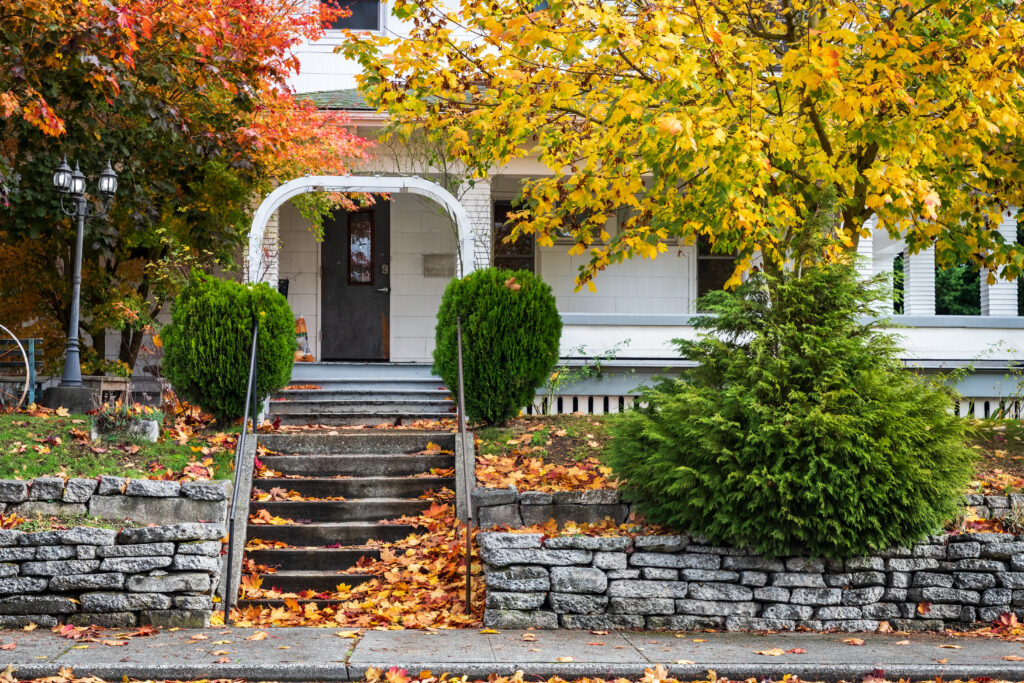
Start outside the home. Fallen leaves can hide uneven pavement, cracks, curbs, and other obstacles. Wet leaves can also create slippery surfaces.
Walk the route your parent typically takes from the driveway or sidewalk to the front door. Look for loose or uneven steps, unstable railings, poor drainage, garden hoses, extension cords, or other objects that could create a tripping hazard.
Make sure railings are secure and easy to grip, and check that outdoor stairs and entrances are well lit.
As colder weather approaches, also decide who will be responsible for removing leaves, snow, and ice. It is much easier to arrange help before the first storm than during one.
2. Improve Lighting as the Days Become Shorter
Shorter daylight hours can make familiar spaces more difficult to navigate, especially for someone experiencing changes in vision, balance, or depth perception.
Check the lighting at entrances, porches, stairs, hallways, bathrooms, and along the path between the bedroom and bathroom. Replace burned-out bulbs and consider adding nightlights or motion-activated lighting in areas that become dark.
Outdoor lighting matters too. If an older adult comes home from an appointment or activity after sunset, the path from the vehicle to the door should be clearly visible. Good lighting is a relatively simple change that can make a home easier and safer to navigate.
3. Do a Fall-Prevention Check Inside the Home
Falls are not an inevitable part of aging, but the risk increases with age. According to the National Institute on Aging, more than one in four adults age 65 and older falls each year, yet many falls can be prevented.
Take a slow walk through the home and look at it from your parent’s perspective. Loose rugs, electrical cords, cluttered walkways, slippery bathroom floors, unstable furniture, and objects stored too high or too low can all create potential fall hazards.
Pay particular attention to stairs and bathrooms. Make sure stairs are well lit and have secure handrails, and consider whether grab bars or nonslip surfaces could make the bathroom safer.
Frequently used items should be within comfortable reach so an older adult does not have to climb on a chair or stretch awkwardly to reach them.
If your parent has recently fallen, has become unsteady, or has started holding onto furniture while walking, consider discussing the change with their healthcare professional rather than assuming it is simply part of getting older.
4. Make Sure the Home Will Stay Warm Enough
Fall is the right time to make sure the heating system is working properly, before temperatures become dangerously cold.
Older adults can be particularly vulnerable to cold temperatures. Age-related changes can make it more difficult to recognize when the body is becoming too cold, and certain health conditions and medications may make it harder for the body to stay warm.
Have the furnace or heating system checked if necessary, address drafts around windows and doors, and make sure your parent knows how to operate the thermostat.
The National Institute on Aging recommends setting the heat to at least 68°F during cold weather. Even a home that feels only mildly cool can become unsafe for some older adults.
Also ask a practical question:
What would happen if the heat stopped working tonight?
Make sure your parent knows who to call and where they could safely stay if the heat stopped working or a power outage left the home too cold.
5. Check Smoke and Carbon Monoxide Detectors
Seasonal changes in heating make fall an especially good time to check smoke alarms and carbon monoxide detectors. Test the alarms and replace batteries or units as recommended by the manufacturer. Make sure smoke alarms are installed where needed throughout the home, including near sleeping areas.
If your parent has hearing loss, consider whether their current alarms can alert them effectively. Specialized alerting devices may use features such as flashing lights or vibration in addition to sound.
Also look for potential fire hazards around fireplaces, candles, electric blankets, extension cords, and portable heaters. If a portable heater is used, follow the manufacturer’s safety instructions carefully. Keep it away from bedding, curtains, furniture, and other materials that can burn, and turn it off when it is not being used.
6. Prepare for Power Outages and Severe Weather
A power outage can be inconvenient for anyone. For an older adult who depends on electrically powered medical equipment, refrigerated medication, mobility equipment, or regular caregiver support, it can become much more serious.
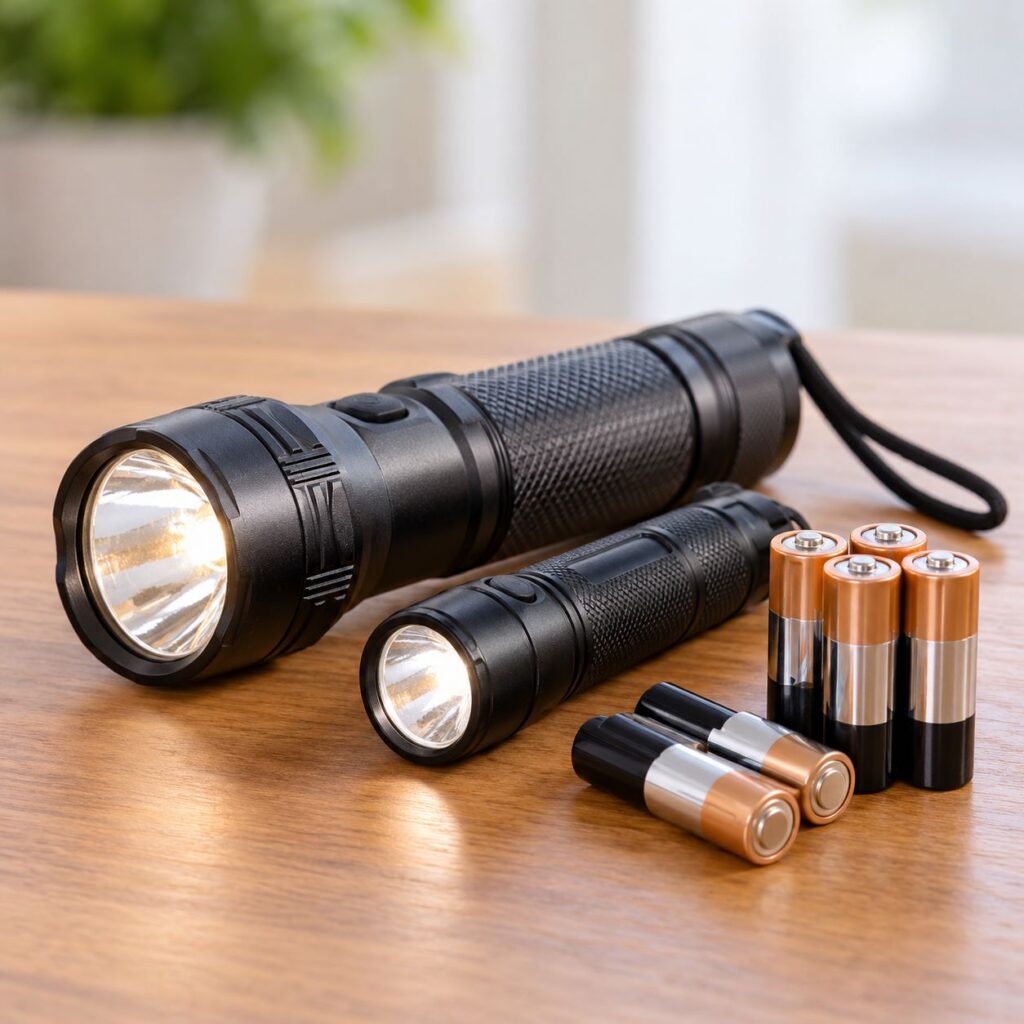
Fall is a good time to create or review an emergency plan before severe weather arrives. Consider keeping essential supplies such as:
- Flashlights and extra batteries
- Drinking water
- Shelf-stable food
- Necessary medications
- A basic first-aid kit
- Warm blankets
- A battery-powered or hand-crank radio
- Portable phone chargers or power banks
- Emergency contact information
Think beyond the emergency kit, too.
Who will check on your parent if the power goes out?
How will they stay warm?
What happens if roads are unsafe or a caregiver cannot reach the home?
If your loved one relies on electrically powered medical equipment, talk with the equipment provider and healthcare team in advance about what to do during a power outage and whether backup power or another emergency plan is needed.
Family members should also know who will check on the person if phone service, electricity, heat, or transportation is disrupted. Having these decisions made ahead of time can make an emergency much easier to manage.
7. Review Medications Before Cold and Flu Season
Fall can be a useful time to review medications, especially if your parent takes several prescriptions or sees multiple healthcare providers. Check whether medications are being taken as directed and whether prescriptions are running low or need to be refilled. Ask whether your parent is having difficulty opening containers, reading labels, remembering doses, or keeping track of when medications should be taken.
It is also a good idea to review over-the-counter medicines and supplements. Before adding a cold, flu, allergy, or sleep medication, ask a doctor or pharmacist whether it could interact with your parent’s existing medications or cause unwanted side effects.
Some medications can contribute to dizziness, sleepiness, confusion, or balance problems, which may also increase the risk of falling in older adults. Do not stop, reduce, or otherwise change a prescribed medication without first talking with the appropriate healthcare professional. A medication review can sometimes identify small problems before they become larger safety concerns.
8. Talk About Flu, RSV, and Other Recommended Vaccinations
Fall is also a good time to talk with a healthcare professional about recommended vaccinations. Adults age 65 and older are at higher risk of developing serious complications from influenza.
The Centers for Disease Control and Prevention (CDC) recommends annual flu vaccination and preferentially recommends certain higher-dose, recombinant, or adjuvanted flu vaccines for adults 65 and older. If one of the preferentially recommended vaccines is not available, CDC advises getting another age-appropriate flu vaccine rather than delaying vaccination.
RSV, or respiratory syncytial virus, can also cause serious illness in older adults. The CDC currently recommends a single dose of RSV vaccine for all adults age 75 and older and for adults ages 50 through 74 who are at increased risk of severe RSV illness.
Unlike the flu vaccine, the RSV vaccine is not currently an annual vaccine. If your parent has already received an RSV vaccine, CDC says another dose is not recommended at this time.
Because vaccine recommendations can change and individual health circumstances differ, families should ask a healthcare professional which vaccines are appropriate for their loved one and when they should be given.
9. Make Sure Clothing and Footwear Are Ready for Colder Weather
It sounds simple, but clothing and footwear can become a safety issue as temperatures drop and outdoor conditions change. Make sure your parent has a coat that fits comfortably and can be put on without difficulty. Check that hats, gloves, scarves, and warm layers are easy to find and reach rather than packed away somewhere difficult to access.
Footwear deserves particular attention. Shoes should fit properly and provide good traction. Worn soles, backless shoes, loose slippers, or footwear that is difficult to put on can increase the risk of slipping or falling.
If arthritis, Parkinson’s disease, weakness, or another condition makes buttons, zippers, or shoelaces difficult to manage, consider clothing and footwear that are easier to put on and remove independently. The goal is not simply to stay warm. Clothing and footwear should also allow an older adult to move safely and comfortably while maintaining as much independence as possible.
10. Plan for Groceries, Meals, and Essential Supplies
Bad weather can make an ordinary trip to the grocery store much more difficult, especially for an older adult who lives alone, no longer drives, or has limited mobility.
Take a look at the refrigerator, freezer, and pantry.
Is there enough food available?
Can your parent prepare meals safely?
Are they eating regularly?
Have they lost weight without intending to?
Does food appear spoiled or expired?
Unintentional weight loss deserves attention. Changes in appetite, difficulty shopping for groceries, problems chewing or swallowing, or simply forgetting to eat can all affect an older adult’s ability to get the nutrition they need.

Fall is a good time to create backup options for days when driving or leaving the house is difficult. That might include grocery delivery, prepared meal services, help from family or neighbors, community meal programs, or assistance from an in-home caregiver.
If you notice significant or unexplained weight loss, difficulty eating or swallowing, or other concerning changes, talk with your parent’s healthcare professional. Try to create a plan before it becomes necessary.
11. Reconsider Driving After Dark and in Bad Weather
Someone who drives comfortably on a bright summer afternoon may feel very differently driving on a rainy November evening. Ask your parent how they feel about driving after dark or when weather conditions are poor.
Age-related changes in vision, hearing, movement, and reaction time can affect driving. Nighttime can present additional challenges, including reduced visibility and glare from headlights or streetlights. Rain, ice, and snow can make driving more difficult for anyone.
The National Institute on Aging recommends that older adults who have trouble seeing at night consider reducing or avoiding nighttime driving and suggests waiting for better weather or using other transportation when rain, ice, or snow makes driving difficult.
Rather than framing the conversation around taking away independence, talk about alternatives. Could family members help with certain trips? Is community transportation available? Could groceries or prescriptions be delivered? Could medical appointments be scheduled earlier in the day? Could rideshare services, taxis, or other transportation options fill some of the gaps?
Having alternatives can make it easier for an older adult to decide not to drive when conditions are poor without feeling that they are giving up their independence altogether.
12. Create a Plan for Staying Active
Cooler temperatures should not automatically mean months of inactivity. Regular physical activity can support strength, balance, mobility, and independence as people age. The right type and amount of activity will depend on your parent’s health, abilities, and current level of activity.
If outdoor walks are part of your parent’s routine, think ahead about alternatives for rainy, icy, or extremely cold days. That might include walking at an indoor shopping center, attending an exercise class designed for older adults, participating in an adult day program, or following an appropriate exercise routine at home.

The CDC recommends that adults age 65 and older include aerobic, muscle-strengthening, and balance activities in their weekly physical activity. If someone cannot meet the general recommendations because of health conditions or physical limitations, the CDC advises being as physically active as their abilities and conditions allow.
If your parent has significant health conditions, mobility limitations, or has recently fallen, talk with their healthcare professional about what types of activity are appropriate. The goal is not to follow a perfect exercise routine. It is to find safe, realistic ways to keep moving as the seasons change.
13. Make Social Connection Part of the Fall Safety Plan
Safety is not only about handrails, medications, and preventing falls. As days become shorter and weather limits outdoor activities, some older adults may spend more time alone. For someone who already has limited opportunities to leave home, the change of seasons can make staying socially connected even more important.
Ask yourself how often your parent has meaningful contact with other people.
Do they regularly see friends or family?
Attend religious services?
Participate in community activities?
Visit a senior center?
Talk regularly with friends or relatives by phone or video?
Have neighbors they know and trust?
Loneliness and social isolation are important health concerns for older adults. The National Institute on Aging notes that social isolation and loneliness are associated with higher risks for certain physical and mental health problems, making social connection an important part of overall well-being.
Create a realistic schedule for calls and visits rather than relying on everyone to “check in when they have time”. For some families, adult day care or in-home care can also provide companionship and regular interaction while supporting an older adult who wants to continue living at home.
14. Pay Extra Attention to a Loved One Living with Dementia
Seasonal changes can present additional challenges for someone living with Alzheimer’s disease or another form of dementia. If your family is navigating memory changes, our Memory Care Explained guide for families can help you understand how care needs may change over time.
Keep routines as predictable as possible, and introduce seasonal or holiday changes gradually when you can. Make sure entrances, hallways, bathrooms, and stairs are well lit. Keep frequently used spaces familiar and avoid unnecessary clutter or sudden changes to the home environment.
Families should also review wandering and exit safety. If your loved one has ever become disoriented, tried to leave unexpectedly, or gotten lost in a familiar place, make sure family members and caregivers know what to do if it happens again.
Do not assume someone is safe from wandering or becoming lost simply because they have lived in the same home for many years. Alzheimer’s disease and other forms of dementia can affect memory, orientation, judgment, and the brain’s ability to navigate familiar surroundings.
If wandering, increasing confusion, or other changes are making it difficult to keep your loved one safe, it may also be time to consider whether additional support at home or memory care could help meet their changing needs.
15. Ask the Most Important Question: Is the Current Level of Care Still Enough?
A fall safety check may reveal something more important than a loose rug or burned-out light bulb. It may show that your parent’s needs have changed. Perhaps Mom is no longer preparing regular meals. Dad has fallen twice but did not tell anyone.
Medications are being missed. Laundry is piling up. Your parent has stopped driving but has no reliable way to get groceries or attend appointments. You notice increasing confusion. Or perhaps everything is technically being managed, but one family caregiver is becoming responsible for nearly all of it.
These changes do not automatically mean your parent needs to leave home. Many older adults can continue living at home with the right combination of family support, community services, home modifications, or professional care.
But changes like these are worth paying attention to. If you are noticing changes but are not sure what they mean, learn more about the 12 signs an aging parent may need more support, including changes in mobility, medications, meals, personal care, memory, and everyday responsibilities.
Instead of asking only, “Can Mom or Dad still live at home?” consider asking:
“What support would help my parent continue living as safely, comfortably, and independently as possible?”
Sometimes a little additional help is enough. In other situations, increasing health, mobility, memory, or personal care needs may mean it is time to explore a different level of support.
Recognizing those changes early gives families more time to understand their options and make thoughtful decisions together, rather than waiting until a fall, hospitalization, or other crisis forces the conversation.
What If Your Parent Needs More Help This Fall?
If your fall check-in suggests that an aging parent needs more support, the next question is often: What kind of help do they need?
The answer does not always involve moving. Some older adults may need only a few hours of help at home, while others may benefit from daytime support, ongoing personal care, specialized memory care, or a residential setting.
Depending on your loved one’s needs, options may include:
In-home care for assistance with everyday activities, companionship, meal preparation, transportation, light housekeeping, and other nonmedical support.
Home health care for eligible medical or skilled services provided at home.
Adult day care for daytime supervision, activities, companionship, meals, and support while the person continues living at home.
Assisted living for someone who may benefit from housing, meals, personal care assistance, medication support, social activities, and access to staff.
Residential care homes for people who may prefer care in a smaller, more home-like residential setting.
Memory care for individuals living with Alzheimer’s disease or another form of dementia who need specialized support and a more structured environment.
Nursing home care for individuals who need a higher level of ongoing nursing or personal care.
The right option depends on your parent’s health, abilities, preferences, budget, available family support, and the amount and type of assistance they need.
Fall Safety Checklist for Aging Parents
If you are visiting an aging parent this fall, use this quick checklist as you look around the home. You do not need to complete everything at once. The goal is to notice changes, identify potential safety concerns, and make a plan for anything that may need attention before colder weather arrives.
Outside the Home
- Are walkways clear and even?
- Are steps in good condition?
- Are railings secure?
- Is outdoor lighting adequate?
- Is there a plan for removing leaves, snow, and ice?
Inside the Home
- Are walkways free of clutter?
- Are loose rugs or cords creating hazards?
- Are stairs well lit?
- Is the bathroom safe to navigate?
- Are frequently used items within easy reach?
Health and Medications
- Are medications being taken correctly?
- Are prescriptions current and available?
- Have seasonal vaccinations been discussed with a healthcare professional?
- Have there been recent falls or changes in mobility?
- Are medical appointments being kept?
Cold-Weather Preparation
- Is the heating system working properly?
- Can your parent operate the thermostat?
- Are warm clothing and appropriate footwear easy to access?
- Is there a plan for a power or heating outage?
- Does your parent know who to call in an emergency?
Daily Life
- Is there enough food in the home?
- Is your parent eating regular meals?
- Can they get groceries and prescriptions?
- Do they have reliable transportation?
- Are they maintaining personal hygiene and housekeeping?
Connection and Support
- Is your parent regularly interacting with other people?
- Does someone check in consistently?
- Has confusion or memory loss increased?
- Does your parent appear safe living alone?
- Is the current caregiving arrangement still manageable?
If several answers concern you, it may be time for a broader conversation about what additional support could help.
Take the Checklist with You
Visiting a parent this fall? Download our free Fall Safety Checklist for Aging Parents to print or save on your phone. Use it as you walk through the home so you can identify potential concerns and make notes about anything that may need attention.
A Seasonal Check-In Can Make a Difference
Preparing an aging parent for fall does not have to happen all at once. Start with a walk through the home. Check the lights. Look at the refrigerator. Ask about medications. Make sure the heat works. Talk about transportation. Find out who will clear the walkway when the weather changes.
And spend some time simply observing and listening. Sometimes the most important discovery during a seasonal safety check is not something that needs to be repaired in the house. It is realizing that someone you love is finding everyday life a little harder than they used to.
Recognizing those changes early gives families more time to talk, understand what is changing, explore their options, and make thoughtful decisions together. Ultimately, fall safety for seniors is not about eliminating every possible risk. It is about noticing what has changed, addressing concerns before they become bigger problems, and helping an aging parent remain as safe, comfortable, and independent as possible.
If additional support is becoming necessary, Long-Term Care Finder can help you explore different types of care and find providers that fit your loved one’s needs, preferences, and budget.
No referral agents. No commissions. Families connect directly with care providers.
Frequently Asked Questions About Fall Safety for Seniors
Fall can bring new questions about an aging parent’s safety, health, and changing needs. Here are answers to some common questions families may have as they prepare for colder weather.
Why is fall safety important for seniors?
Fall brings seasonal changes that can affect older adults, including shorter daylight, cooler temperatures, wet leaves, changing driving conditions, respiratory illness season, and more time spent indoors. It is also a good time for families to review home safety, prepare for colder weather, and consider whether an aging parent’s health, mobility, or everyday care needs have changed.
What are the most important fall safety tips for seniors?
Start with the areas most likely to affect everyday safety. Clear walkways, improve lighting, reduce fall hazards inside and outside the home, check the heating system, review medications, prepare for emergencies, plan for transportation and groceries, and make sure your loved one has regular social contact. It is also important to pay attention to changes in mobility, memory, nutrition, personal care, or other daily activities that could indicate a need for additional support.
How can I prepare my elderly parent for colder weather?
Check the heating system, warm clothing, footwear, food supply, medications, emergency supplies, transportation options, and plans for removing snow and ice. Families should also have a plan for what will happen if there is a power outage, heating failure, severe weather, or another emergency that makes it difficult to reach their loved one.
What temperature should an older adult’s home be in cold weather?
The National Institute on Aging recommends setting the heat to at least 68°F during cold weather. Older adults can be particularly vulnerable to hypothermia, and NIA notes that even mildly cool homes between 60°F and 65°F can lead to hypothermia in older adults.
When should seniors get a flu shot?
For most people who need one flu vaccine for the season, September and October are generally good times to get vaccinated, and the CDC says vaccination should ideally occur by the end of October.
Most adults, especially those age 65 and older, generally should not get vaccinated early in July or August because protection may decrease over time. However, individual circumstances can affect timing, so older adults should talk with a healthcare professional about when to receive their flu vaccine.
Does Medicare cover flu shots?
Yes. Medicare Part B covers the seasonal flu vaccine, usually once each flu season. You pay nothing for the flu shot if the doctor or other healthcare provider accepts Medicare assignment for administering the vaccine.
Should older adults get an RSV vaccine?
The CDC currently recommends a single dose of RSV vaccine for all adults age 75 and older and for adults ages 50 through 74 who are at increased risk of severe RSV illness.
RSV vaccination is not currently an annual vaccination. If someone has already received an RSV vaccine, the CDC does not currently recommend another dose. Eligible adults can receive the vaccine at any time of year, but late summer and early fall are generally the best times, typically August through October in most of the continental United States.
How can I tell if my aging parent is no longer safe living alone?
There is no single sign that determines whether an older adult can safely live alone. Families may want to pay attention to recent falls, medication mistakes, difficulty preparing meals, unexplained weight loss, worsening personal hygiene, unpaid bills, increasing confusion, getting lost, difficulty maintaining the home, or problems managing transportation.
Rather than focusing only on whether your parent needs to move, consider what additional support could make everyday life safer and more manageable.
Does needing help mean my parent has to move to assisted living?
No. Many older adults can continue living at home with additional support. Depending on their needs, options may include help from family, in-home care, home health care, adult day care, meal services, transportation assistance, home modifications, or other community services.
Assisted living or another residential care setting may become an option when a person’s needs can no longer be safely or realistically managed at home, or when the older adult and family decide that a different living arrangement would provide the support they need.
How often should families check on an aging parent who lives alone?
There is no single schedule that is appropriate for everyone. The frequency of check-ins should reflect the person’s health, mobility, cognitive abilities, social network, living situation, and ability to manage everyday activities independently.
Someone who is healthy and independent may need less frequent contact than a person experiencing falls, memory changes, medication problems, mobility limitations, or increasing difficulty with daily activities. As needs change, families may need to arrange more frequent check-ins or additional support.