
There is a particular kind of heartbreak in watching someone you love stand in the kitchen they’ve cooked in for forty years, looking around as if they’ve never seen it before.
A person may have lived in the same neighborhood for 30 years. They know which house is theirs, where the grocery store is, and how to get to the pharmacy. They may have driven the same streets hundreds or even thousands of times. Then one day, they cannot find their way home.
For families, this can be one of the most frightening and difficult changes associated with dementia. It doesn’t seem to make sense. How could someone forget a route they have followed for decades? How could they become confused inside their own neighborhood? Why would someone who is already home insist that they need to “go home”?
Understanding why people with dementia get lost starts with recognizing that this is about much more than simple forgetfulness.
Finding our way through the world requires several parts of the brain to work together. We need to recognize landmarks, remember where places are located, understand direction and distance, pay attention to our surroundings, make decisions, and continuously update our sense of where we are.
Dementia can gradually interfere with these abilities. As the disease affects the brain, a person may still recognize a building, street, or room while losing the ability to understand where that place is in relation to somewhere else. That is why someone can become lost even in a place that has been familiar for decades.
The National Institute on Aging includes wandering and getting lost in a familiar neighborhood among possible signs of dementia. The Alzheimer’s Association also notes that people living with dementia may lose the ability to recognize familiar places and become confused about their location.
Understanding why people with dementia get lost in familiar places can help families see these behaviors differently. Rather than viewing the behavior as simple forgetfulness or assuming their loved one is being careless or difficult, families can begin to understand the changes happening in the brain and take practical steps to help their loved one remain safe.
Getting Lost Is Not Just a Memory Problem
When we think about dementia, we usually think about memory loss, the same bucket as misplaced keys or forgotten appointments. But dementia can affect much more than the ability to remember names, conversations, or recent events.
It can also affect:
- Spatial awareness
- Visual processing
- Attention
- Judgment
- Problem-solving
- Recognition
- Orientation to time and place
- Decision-making
- The ability to follow a sequence of directions
- The ability to create and use a mental map of the environment
All of these abilities contribute to navigation. Imagine driving home from the grocery store. You may not consciously think about every decision you make. You recognize an intersection, know which direction to turn, remember where your neighborhood is, recognize the entrance to your subdivision, identify your street, and eventually recognize your house.
Your brain is constantly combining visual information with stored memories and your awareness of location.
One reason why people with dementia get lost is that pieces of this complex navigation system can begin to break down. A person might recognize the grocery store but not remember which direction leads home. They may recognize a street but not understand where that street is in relation to their house. They might reach a familiar intersection and suddenly be unable to decide which way to turn. Or they may become disoriented and no longer recognize the surroundings at all.
This is one example of how dementia can affect far more than memory. In our article How Dementia Changes the Brain, we explain how progressive brain changes can eventually affect communication, movement, eating, judgment, and other everyday abilities.
How Does the Brain Know Where We Are?
Finding our way around may feel automatic, especially in places we have known for years. But navigation is actually a remarkably complex brain function.
As we move through the world, the brain is constantly processing questions such as: “where am I?”, “where am I trying to go?”, “which direction should I move?”, “what landmarks do I recognize?”, “how far have I traveled?”, “have I been here before?”, “how do I get back to where I started?”
To answer those questions, the brain combines memory, vision, spatial awareness, attention, and information about our own movement. Scientists often describe part of this process as creating and using an internal cognitive map, a mental representation of where places are and how they relate to one another.
Several interconnected areas of the brain help make this possible. Two that are particularly important in Alzheimer’s disease are the hippocampus and entorhinal cortex.
The Hippocampus Helps Us Remember Places and Routes
The hippocampus plays an important role in both memory and spatial navigation. It helps us remember locations and understand how different places relate to one another. For example, you may know that the pharmacy is past the grocery store, the park is several blocks from your house, and the main road eventually leads back toward your neighborhood, without needing to be standing in front of each place.
Your brain has built a mental representation of the area. Researchers sometimes call this type of map-based navigation allocentric navigation. It allows us to understand where places are in relation to other places rather than only in relation to where we happen to be standing.
Think about picturing your own home from above. You probably know that the kitchen is beside the dining room and the bedrooms are down the hallway even though you cannot see all of those rooms at once. That mental map helps you understand the overall layout.
Alzheimer’s disease can affect brain regions involved in memory and spatial navigation relatively early in the disease process. As those systems become less reliable, the mental map a person has depended on for years may become harder to create, retrieve, or use.
The Entorhinal Cortex Helps the Brain Keep Track of Location
Another important part of the navigation network is the entorhinal cortex, which communicates closely with the hippocampus. Research has identified specialized cells within this navigation system, including grid cells, thought to contribute to our internal sense of position as we move through an environment.
Researchers call one form of this egocentric navigation. Instead of thinking primarily about where one landmark is in relation to another, egocentric navigation uses your own body as the reference point: the bathroom is at the end of this hallway, the doorway is on my left, I turn right at the mailbox.
Healthy navigation does not depend on just one of these strategies. The brain normally combines map-based information, body-centered directions, familiar landmarks, learned routes, visual information, and memories of previous journeys, often without us consciously thinking about any of it. That flexibility is what allows you to take a different road home when your usual street is closed.
What Happens When Dementia Disrupts This Navigation System?
Dementia can gradually interfere with different parts of this network.
Research into spatial navigation in Alzheimer’s disease has found difficulties involving multiple abilities, including map-based navigation, body-centered navigation, visual-spatial processing, learning routes, recognizing important environmental cues, and keeping track of location while moving.
Problems with spatial navigation can also be detected in some people with mild cognitive impairment, which may sometimes precede Alzheimer’s disease or another form of dementia.
Importantly, these abilities may not decline at exactly the same time or at the same rate. A person may lose some ability to use a broader mental map while still being able to follow a highly familiar route using recognizable landmarks and a learned sequence of turns. For example: leave the house, turn right at the corner, walk past the church, turn left at the mailbox, the store is ahead.
The person may have followed that route hundreds of times, and familiar visual cues can continue helping them along the way. But then something changes. The road is closed. Construction blocks the familiar sidewalk. Someone drives them home from a different direction. A store they used as a landmark is closed. They enter the building through a different entrance. Suddenly, the familiar sequence of cues is gone.
A healthy brain can usually adapt by consulting its broader mental map and finding another route. A brain affected by dementia may have much more difficulty doing that. The person may recognize individual landmarks yet no longer understand how those landmarks fit together or how to use them to reach the destination.
This helps explain one of the most confusing things families may witness: someone can successfully walk the same route day after day and then become completely lost when one part of that familiar routine changes. It does not necessarily mean that all memory of the neighborhood has suddenly disappeared. Instead, the different brain systems that once worked together to answer “where am I, and how do I get home?” may no longer be communicating and adapting as reliably as they once did.
The place may still be familiar, but the brain’s ability to navigate through it is changing.
Why Familiar Places Can Suddenly Feel Unfamiliar
This is the part that confuses so many families: shouldn’t a place someone has lived in for decades be the last place they’d get lost? Intuitively, yes. Neurologically, not necessarily. A daughter might think: “Mom has lived here since 1989. How could she possibly not know where she is?”
To understand why people with dementia get lost even in familiar places, it helps to remember that familiarity depends on the brain being able to retrieve and correctly use stored information. The number of years someone has lived somewhere does not guarantee that the brain will always be able to access that information.
Dementia may cause a person to:
- Stop recognizing certain landmarks.
- Recognize a landmark but forget what it means.
- Forget the sequence of turns required to reach a destination.
- Become confused about which direction they are traveling.
- Have difficulty judging distance.
- Lose track of where they started.
- Have trouble connecting one familiar place to another.
- Become overwhelmed when several navigation decisions must be made quickly.
This explains why someone may successfully travel most of the way home and then become confused at the final intersection. Their entire memory of the neighborhood has not necessarily disappeared. Instead, the brain may no longer be able to reliably put all the pieces together.
Getting Lost Can Happen Earlier Than Families Expect
Families sometimes assume that getting lost happens only in advanced dementia. That is not always the case. The National Institute on Aging lists wandering and getting lost among problems that can occur during mild Alzheimer’s disease, along with losing track of dates or location, difficulty planning, repeating questions, and taking longer to complete everyday tasks.
Getting lost is only one of many changes that may appear as Alzheimer’s progresses. Families who want to better understand how symptoms and abilities can change over time can read our Alzheimer’s Disease Explained: Symptoms, Stages, Causes, and Care Options for Families guide.

Someone in an earlier stage may still carry on a normal conversation, dress independently, prepare simple meals, recognize family members, attend social activities, walk independently, and perform many familiar routines. Because the person appears relatively independent, an episode of getting lost can seem especially surprising.
One early warning sign may be difficulty following a route that used to be automatic.
A person might begin:
- Missing familiar turns.
- Becoming confused at intersections.
- Calling family for directions from familiar places.
- Arriving home much later than expected.
- Getting confused in large parking lots.
- Having difficulty finding their car.
- Becoming disoriented inside familiar stores.
- Struggling to find a restroom in a familiar building.
- Driving around because they cannot remember how to get home.
The NIA recommends talking with a doctor when someone begins getting lost in places they previously knew well, particularly when this occurs along with other noticeable changes in memory or thinking.
Why Someone Can Recognize a Place but Still Get Lost
Recognition and navigation are related, but they are not the same ability.
Someone might look at a church and correctly say, “that’s our church”, but not know whether home is to the left or right. They may recognize their grocery store but have no idea how to travel from the store back to their neighborhood. They may recognize their street once someone brings them there but have been unable to find the street themselves.
This can be extremely confusing to families because it appears that the person’s memory is working one moment and failing the next. But different brain functions can decline at different rates. Recognizing something visually is not exactly the same neurological task as remembering a route, judging direction, or understanding your current position in relation to a destination.
Why Does Someone with Dementia Say “I Want to Go Home” When They Are Already Home?
This is another experience many families encounter. A person may be sitting in the house where they have lived for decades and repeatedly say, “I want to go home.” Correcting them may not help. “Mom, you are home. You’ve lived here for 25 years.” But she may still insist, “No, this isn’t my home.”
There are several possible reasons.
Their Idea of “Home” May Come from an Earlier Period of Life
Dementia often affects recent memories differently from older memories. A person may mentally place themselves decades earlier in life. If they believe they are 40 years old rather than 82, “home” might mean the house where they raised their children. For others, home may mean their childhood home. They may genuinely believe they need to return there.
They May No Longer Recognize Their Current Home
Changes in memory, recognition, and visual-spatial processing can make familiar surroundings feel unfamiliar. Furniture may have been moved. The lighting may look different. A room may not match the person’s internal memory of what home should look like.
“Home” May Mean Safety Rather Than a Physical Address
Sometimes “I want to go home” may express an emotional need rather than a literal request for transportation. The person may feel frightened, overwhelmed, tired, confused, lonely, unsafe, or uncertain about where they are. “Home” may represent comfort, familiarity, security, or the presence of someone they miss.
The Alzheimer’s Association identifies wanting to “go home” while already home as one possible sign of wandering risk. Instead of repeatedly arguing about where they are, it may be more helpful to respond to the emotion underneath the words: “You seem worried. I’m here with you.” Then gently redirect toward something familiar or comforting.
Is Getting Lost the Same Thing as Wandering?
Not necessarily. The term wandering is widely used in dementia care, but it can sometimes make behavior sound random or meaningless. Often, the person has a reason for moving. They may believe they need to go to work, pick up their children from school, find their spouse, return to a former home, find a bathroom, get something to eat, look for an object, or complete a responsibility from earlier in life.
For example, a retired teacher may begin looking for the school because she believes she is late for class. A father may try to leave the house because he believes his children are waiting to be picked up. A former factory worker may put on his coat every morning because he believes he has to report for his shift.
From the person’s perspective, the behavior may make perfect sense. The problem is that dementia has changed their understanding of time, place, or circumstances. Once they leave, their impaired navigation system may prevent them from finding their way back.
Who Is at Risk of Wandering or Getting Lost?
Any person living with dementia can potentially become lost. According to the Alzheimer’s Association, six in 10 people living with dementia will wander at least once, and many do so repeatedly.
Warning signs may include:
- Returning later than usual from a routine walk or drive.
- Forgetting how to reach familiar destinations.
- Frequently asking where they are.
- Pacing or appearing restless.
- Trying to leave to fulfill an old responsibility.
- Asking to “go home” while already home.
- Having difficulty locating the bathroom or bedroom.
- Searching for people from the past.
- Becoming confused in unfamiliar or crowded environments.

These behaviors should not automatically be treated as deliberate disobedience. They may indicate that the person’s ability to understand their environment is changing.
Can Someone Get Lost Inside Their Own Home?
Yes. As dementia progresses, navigation problems can become increasingly local. Initially, someone might get lost driving across town. Later, they may become confused walking through their neighborhood. Eventually, they may have trouble finding familiar rooms inside their own home.
They might ask “where’s the bathroom?” even though it has been in the same hallway for years. They may open several doors looking for the bedroom. They might wake during the night and be unable to determine where they are.
This can happen because the brain is increasingly struggling to interpret and organize the environment. Simple visual cues can sometimes help:
- Clearly labeling the bathroom door.
- Using easy-to-recognize pictures or symbols.
- Keeping important pathways uncluttered.
- Providing good lighting, especially at night.
- Using nightlights between the bedroom and bathroom.
- Keeping furniture arrangements relatively consistent.
The Alzheimer’s Association recommends signs or symbols that explain the purpose of rooms as one possible home-safety strategy.
Why Can New Places Make the Problem Worse?
A person with dementia may function surprisingly well at home because routine and environmental cues compensate for some of the brain changes. Take those cues away, and the difficulty may suddenly become much more obvious. This can happen during vacations, hospital stays, rehabilitation stays, hotel stays, family visits, moves to a new home, large family gatherings, shopping trips, or doctor appointments.
Even familiar environments that have been remodeled or rearranged can cause confusion. Families may therefore need to provide more supervision in unfamiliar environments than they normally provide at home.
Can Stress, Fatigue or Sundowning Make Getting Lost Worse?
They can. Navigation becomes more difficult when a person is tired, anxious, distracted, overstimulated, or confused. Some people with dementia experience increasing confusion, restlessness, or agitation later in the afternoon or evening, often called sundowning.
If a person already has difficulty with spatial orientation, these additional challenges may make navigating even harder. Identifying patterns can be helpful. If someone repeatedly becomes restless around 5 p.m., consider what may be contributing: Are they hungry? Do they need the bathroom? Are they tired? Is the room becoming darker? Is there too much noise? Are they following an old routine of leaving work or preparing to go somewhere?
Understanding the possible need behind the behavior may help families respond before the person attempts to leave.
What If the Confusion Appears Suddenly?
A sudden, dramatic change in orientation should not automatically be assumed to be dementia progression. If someone who normally knows their surroundings suddenly becomes extremely confused or disoriented, contact a healthcare professional promptly.
Sudden confusion can have causes other than dementia progression, including illness, medication problems, dehydration, metabolic problems, or delirium. This is especially important when confusion develops over hours or days rather than gradually over weeks or months.
Seek urgent medical attention when sudden confusion occurs with symptoms that could indicate a medical emergency, such as weakness on one side of the body, facial drooping, difficulty speaking, severe headache, loss of consciousness, breathing difficulty, or other sudden neurological changes.
Does Getting Lost Mean Someone Should Stop Driving?
Getting lost while driving should be taken seriously. Driving requires far more than remembering how to operate a car.
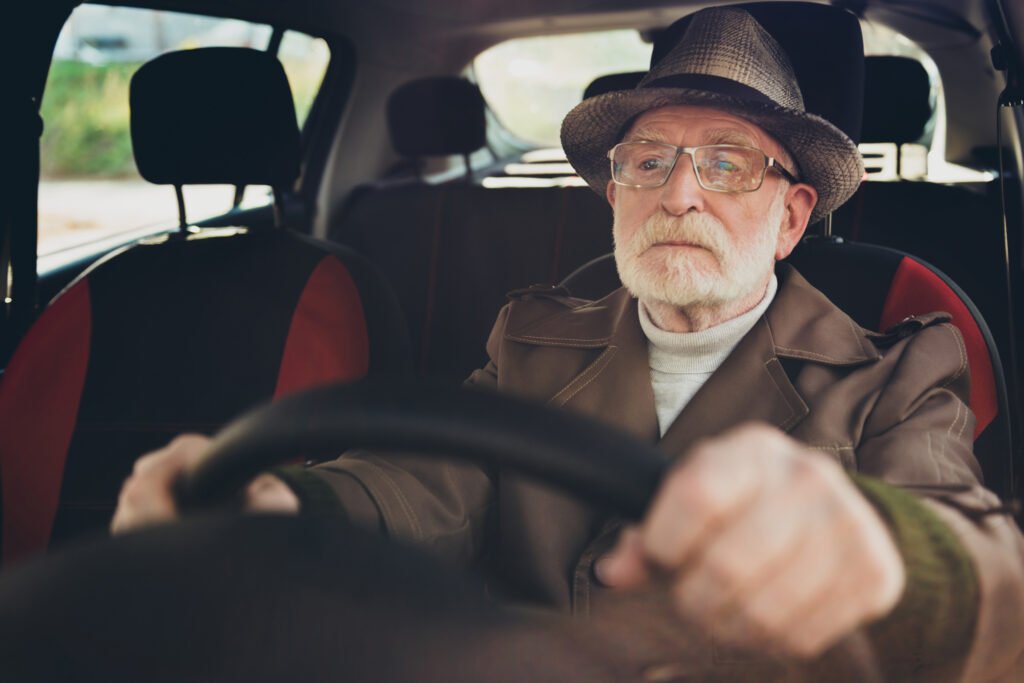
A driver must:
- Navigate.
- Recognize traffic signs.
- Judge speed and distance.
- Respond quickly.
- Divide attention between several things.
- Make rapid decisions.
- Adapt when something unexpected happens.
- Remember the destination and route.
Someone may still physically know how to start the car, steer, brake, and accelerate while losing other cognitive abilities necessary for safe driving.
A person who repeatedly misses familiar turns, gets lost on routine routes, becomes confused at intersections, or cannot find their way home should have their driving safety evaluated. The fact that someone has “never had an accident” does not necessarily mean driving remains safe.
How Can Families Reduce the Risk of Someone Getting Lost?
No strategy can completely eliminate the risk, but families can create layers of protection.
1. Pay Attention to Early Warning Signs
Do not wait for a serious incident before making a plan. A routine walk taking much longer than usual or a person becoming confused on the way home can be an important warning.
2. Maintain Familiar Routines
Predictability can reduce confusion. Try to keep meals, activities, sleep, and daily routines relatively consistent when possible.
3. Provide Meaningful Activity
Restlessness may sometimes decrease when the person has safe opportunities to move and participate in meaningful activities, such as walking together, folding laundry, gardening, listening to familiar music, sorting photographs, or helping prepare meals.
4. Address Basic Needs
Before assuming someone is “wandering,” consider whether they are trying to meet a need. They may be hungry, thirsty, in pain, looking for the bathroom, bored, lonely, anxious, too hot or cold, or looking for someone.
5. Consider Door Alerts
Door alarms, motion sensors, smart home devices, or other monitoring systems can alert a caregiver when an exterior door opens. The goal should be safety while preserving dignity and as much independence as possible.
6. Use Identification
The National Institute on Aging recommends considering identification such as a medical bracelet and keeping current identifying information available.
7. Consider GPS or Location Technology
GPS devices, watches, phones, and location-sharing services may provide another layer of protection. The Alzheimer’s Association notes that GPS and location-sharing technology can support safety for people at risk of wandering. Technology should supplement a safety plan rather than create a false sense that someone at significant risk can safely be left unsupervised.
8. Tell Trusted Neighbors
Trusted neighbors can become an important part of the safety network. Let them know whom to contact if they see your loved one walking alone, appearing confused, or leaving at an unusual time.
9. Keep a Recent Photograph
Keep a recent, clear photograph readily available. You do not want to search through hundreds of phone photos during an emergency.
10. Know Where They May Try to Go
Think about places that are emotionally significant, such as a former workplace, a childhood home, a previous house, a church or place of worship, a favorite store or restaurant, a family member’s home, a school, or a former neighborhood.
What Should You Do If a Person with Dementia Goes Missing?
Treat it as an emergency. Do not assume the person will eventually remember the way home. Begin looking immediately. Quickly check the house, garage, yard, nearby streets, familiar walking routes, favorite places, former workplaces or homes if nearby, and areas where the person has gone during previous episodes.
Also consider environmental hazards near the home, including busy roads, bodies of water, wooded areas, construction sites, railroad tracks, and extreme weather.
If the person is not found quickly, call 911 and tell the dispatcher that the missing person has dementia or cognitive impairment.
The Alzheimer’s Association advises beginning search efforts immediately and contacting 911 if the person has not been found within 15 minutes.
Have ready:
- A recent photograph.
- Full name.
- Age.
- Physical description.
- Clothing description.
- Medical information.
- Phone number if carrying a phone.
- Vehicle description and license plate if applicable.
- Places the person may try to visit.
- Information about previous episodes.
Do not worry that you are overreacting. A person with dementia who is missing may not understand that they are in danger, may not know how to ask for help, and may continue moving farther from home.
What Should You Say When You Find Them?
Finding someone after they have been missing can bring an enormous rush of emotion. You may feel relieved, frightened, angry, or exhausted. But the person may be frightened too. Try not to begin with “why did you leave?”, “I told you not to go outside!” or “how could you do this to us?” They may not remember leaving or understand what happened.
Instead, approach calmly. You might say, “I’m so glad I found you. Let’s go home together.”The immediate goal is reassurance and safety. Later, the family can review what happened and decide what additional safeguards are needed.
When Is It No Longer Safe for Someone with Dementia to Live Alone?
There is no single moment that applies to every family. Getting briefly confused once does not automatically mean someone needs to move. But repeated episodes of getting lost can be an important sign that living arrangements need to be reevaluated.
Look at the whole picture. Can the person:
- Find their way home?
- Use a phone to call for help?
- Recognize dangerous situations?
- Manage medications safely?
- Prepare food safely?
- Respond appropriately to emergencies?
- Remember to lock doors?
- Avoid unsafe driving?
- Get help if they fall?
- Navigate the home safely at night?
A particularly important question is: what would happen if nobody checked on this person for several hours?
As dementia progresses, the amount of supervision and support someone needs may gradually increase. Some families add in-home support. Others have relatives rotate supervision. Some eventually consider assisted living, residential care homes, or memory care.

Memory care communities, in particular, are generally designed around the safety needs of people living with Alzheimer’s disease and other forms of dementia, including secured or monitored environments intended to reduce unsafe exits.
The right decision depends on the person’s abilities, risks, preferences, available family support, finances, and care needs.
Getting Lost Can Be Frightening for the Person, Too
It is easy to focus entirely on the danger. But imagine what the experience may feel like from the person’s perspective. You walk down a street you believe you know. Something suddenly feels wrong. The houses do not look familiar. You cannot remember which direction you came from. You know you should recognize the area, but you don’t. You try another street. Now you are even less certain.
Someone approaches and asks where you live. You cannot remember the address. That experience can be terrifying. A person who becomes defensive, angry, suspicious, or resistant when someone tries to help may actually be frightened and confused.
Compassion does not mean ignoring the danger. It means understanding that the behavior is being driven by changes in the brain rather than assuming the person is being careless, difficult, or intentionally uncooperative.
Key Takeaways
Understanding why people with dementia get lost begins with recognizing that getting lost is not simply a matter of forgetting an address. Navigation requires the brain to combine memory, attention, visual information, spatial awareness, direction, judgment, and recognition. As dementia damages the systems responsible for these abilities, even a neighborhood or home that has been familiar for decades can gradually become difficult to navigate.
A person may recognize individual landmarks but no longer understand how they connect. They may believe they need to go to work, pick up children who are now adults, or return to a home they lived in decades earlier. That is why families should look beyond the word “wandering” and ask: what might my loved one be trying to do, find, or communicate?
At the same time, getting lost can create serious safety risks. Planning ahead with identification, location technology, home-safety measures, supervision, trusted neighbors, and a clear emergency plan can help families respond quickly if something happens.
Final Thoughts
Watching someone you love become lost in a place they once knew by heart can be heartbreaking. The person who once drove the family everywhere may suddenly need help finding the way home. Someone who knew every street in the neighborhood may become confused a few blocks from their house. Eventually, even finding the bathroom may become difficult.
These changes do not erase the person’s history with those places. They reflect what dementia is doing to the brain. Understanding that difference can change the way families respond. Instead of asking “how can you not know where you are?” we can begin asking “what is making this environment difficult for you now, and how can I help you feel safe?”
As dementia progresses, families may also reach a point when their loved one needs more supervision than can safely be provided at home. Longtermcarefinder.com helps families explore memory care, assisted living, residential care homes, home-based services, and other long-term care options and connect directly with providers.
Because understanding what is happening is the first step. Finding the right support is the next.
Learn More About Dementia
Dementia can affect far more than memory. As the disease progresses, families may face new questions about safety, mobility, eating and drinking, care options, and how to manage the growing demands of caregiving. These Long-Term Care Finder resources can help you better understand what may happen and prepare for changing care needs:
Memory Care Explained: A Complete Guide for Families Navigating Alzheimer’s and Dementia Care
Learn what memory care provides, who may benefit, what services to expect, and what families should consider when dementia care needs become more difficult to manage at home.
Why People with Dementia Stop Walking: Understanding the Brain Changes Behind Mobility Loss
Understand how dementia can affect the brain systems involved in walking, balance, coordination, and movement, and why mobility may gradually decline.
Can Someone with Dementia Starve to Death?
Learn why eating and drinking often change in advanced dementia, what may be happening in the brain and body, and what families should know as these changes progress.
Family Caregiver Burnout: Warning Signs, Causes, and Support Every Caregiver Needs
Recognize the physical and emotional signs of caregiver burnout, understand why dementia caregiving can become overwhelming, and explore ways to find additional support.
Can You Reduce Your Risk of Dementia? 14 Factors Researchers Say May Matter
Explore 14 potentially modifiable factors researchers have identified that may influence dementia risk and practical ways to support brain health throughout life.
Frequently Asked Questions About Dementia and Getting Lost
Families often have questions about why people with dementia get lost, when it may begin, and what these changes mean for safety and independence. The answers below address some of the most common questions about getting lost, wandering, driving, GPS, and navigating familiar places.
Is getting lost an early sign of dementia?
It can be. Occasionally taking a wrong turn does not necessarily mean someone has dementia. But repeatedly getting lost in familiar places, forgetting well-known routes, or becoming increasingly confused about location should be discussed with a healthcare professional, especially when other changes in memory, judgment, language, or daily functioning are present.
Why do people with dementia get lost in places they have known for years?
Dementia can affect memory, spatial awareness, visual processing, attention, judgment, and the brain systems used to navigate. A person may still recognize individual landmarks while losing the ability to connect those landmarks into a reliable mental map.
Can someone with dementia forget where the bathroom is in their own home?
Yes. As dementia progresses, some people have difficulty locating familiar rooms. Clear signs, pictures, good lighting, and consistent furniture arrangements may make navigation easier.
Does everyone with dementia wander?
No. Not everyone will display the same behaviors. However, anyone living with dementia can potentially become confused or lost, which is why families should consider a safety plan before an emergency occurs.
Why does my parent keep trying to go home when they are already home?
They may be remembering an earlier home, mentally experiencing an earlier period of life, failing to recognize their current surroundings, or using “home” to express a need for comfort and security.
Should I correct someone who says they are not home?
Repeatedly arguing may increase distress without changing what the person believes. It may be more helpful to acknowledge the emotion (“you seem worried”), then offer reassurance, and gently redirect them.
Can GPS prevent someone with dementia from getting lost?
GPS technology cannot prevent every episode, but it may help caregivers locate someone more quickly. It should be considered one part of a broader safety plan.
Can dementia cause someone to get lost while driving?
Yes. Dementia can affect navigation, attention, judgment, reaction time, visual-spatial processing, and decision-making. Getting lost on familiar routes should prompt a discussion about driving safety.
Does getting lost mean dementia is getting worse?
It can indicate changing cognitive abilities, but one episode alone cannot determine the stage or progression of dementia. Families should look for patterns and discuss significant changes with the person’s healthcare provider.
Can someone suddenly start getting lost?
A gradual increase in disorientation may occur as dementia progresses. However, sudden or dramatic confusion should be medically evaluated because infections, medication effects, dehydration, delirium, stroke, and other medical problems can also cause acute confusion.
At what stage of dementia does wandering usually begin?
Getting lost can occur relatively early, while more persistent wandering behaviors are often associated with later progression. There is significant variation between individuals, so families should base safety decisions on the person’s actual abilities and behavior rather than relying only on a dementia stage.
What should I do the first time my loved one gets lost?
Take the incident seriously even if they returned safely. Try to determine what happened, where they went, how long they were gone, whether driving was involved, and what may have triggered the episode. Then review identification, door alerts, GPS options, supervision, transportation, driving safety, and an emergency response plan.
Should someone with dementia ever walk alone?
Some people in earlier stages may remain capable of taking familiar walks independently, while others may not be safe doing so. The decision should be individualized based on orientation, judgment, previous episodes of getting lost, ability to seek help, traffic and environmental hazards, and recommendations from the person’s healthcare team.