
Caring for a loved one with dementia can be overwhelming. Between managing medical appointments, coordinating care, understanding Medicare benefits, and supporting a loved one while balancing your own responsibilities, many families find themselves navigating a complex healthcare system with little guidance.
If you’ve recently heard about the Medicare GUIDE Model, you may be wondering what it is, who qualifies, and whether it can help your family. The good news is that this Medicare program was created to improve dementia care by providing better care coordination, caregiver education, access to community resources, and support designed to help people living with dementia remain safely at home whenever possible.
The Centers for Medicare & Medicaid Services (CMS) developed the Medicare GUIDE Model to improve care coordination and support for people living with dementia and their family caregivers.
In this guide, you’ll learn what the Medicare GUIDE Model is, how it works, who may be eligible, what services it provides, and how it compares with other Medicare-covered services such as home health care and hospice. We’ll also explain some common situations that can affect eligibility, including assisted living, memory care, and nursing home residency.
Whether you’re planning ahead after a new diagnosis or searching for additional support as dementia progresses, understanding the Medicare GUIDE Model can help you make more informed decisions for your loved one and your family.
If you’re just beginning this journey, our Memory Care Explained: A Complete Guide for Families Navigating Alzheimer’s and Dementia Care can help you better understand the specialized care available for people living with dementia.
Key Takeaways
- The Medicare GUIDE Model supports people living with dementia and their caregivers.
- It focuses on care coordination, caregiver education, and community resources.
- GUIDE does not replace home health care or hospice.
- It does not pay for assisted living or nursing home costs.
- Not everyone with dementia qualifies.
- Enrollment is available only through participating GUIDE providers.
Important: The information in this article is for educational purposes only and should not be considered legal, financial, or medical advice. Medicare policies and eligibility requirements may change. Always consult your healthcare provider or Medicare for the most current information.
What Is the Medicare GUIDE Model?
Quick Answer: The Medicare GUIDE Model (Guiding an Improved Dementia Experience) is a Medicare program designed to improve the quality of care for people living with dementia while providing meaningful support for their family caregivers.
Rather than replacing a person’s doctors or existing healthcare services, the GUIDE Model brings together a team of healthcare professionals who help coordinate care, create personalized care plans, connect families with community resources, provide caregiver education, and offer access to respite services when eligible.
The program’s primary goal is to help people with dementia remain safely in their homes and communities for as long as appropriate, while reducing unnecessary emergency room visits, hospitalizations, and caregiver stress.
Because eligibility requirements apply, not everyone living with dementia qualifies for GUIDE services. In general, the program is intended for Medicare beneficiaries with a dementia diagnosis who meet specific participation criteria established by Medicare and receive care from a healthcare organization participating in the GUIDE Model.
In the sections below, we’ll explain how the Medicare GUIDE Model works, who may qualify, what services are included, and how it differs from home health care, hospice, and other long-term care services.
What Does GUIDE Stand For?
GUIDE stands for Guiding an Improved Dementia Experience. It is a Medicare initiative designed to improve dementia care by providing coordinated support for both people living with dementia and the family members or friends who care for them.
The name reflects the program’s purpose: to guide families through the challenges of dementia by connecting them with a dedicated care team, personalized care planning, caregiver education, community resources, and other supportive services. Rather than focusing only on medical treatment, the GUIDE Model takes a more comprehensive approach that addresses the medical, emotional, and practical needs of both the individual with dementia and their caregiver.
By helping families navigate the healthcare system and access available resources, the Medicare GUIDE Model aims to improve quality of life, reduce caregiver burden, and help eligible individuals remain safely at home for as long as possible.
Why Medicare Created the GUIDE Model
The number of Americans living with dementia continues to grow as the population ages, creating new challenges for individuals, families, and the healthcare system. Caring for someone with dementia often involves coordinating multiple doctors, medications, therapies, and community services, making it difficult for families to know where to turn for help.
Many family caregivers also experience significant physical, emotional, and financial strain. Managing day-to-day care while balancing work, family responsibilities, and personal health can lead to caregiver burnout, increasing the risk of stress, anxiety, depression, and other health problems.
At the same time, dementia care is often fragmented. Specialists, primary care providers, hospitals, home health agencies, and community organizations may all be involved in a person’s care, but they do not always communicate effectively with one another. This lack of coordination can result in unnecessary emergency room visits, repeated hospitalizations, medication errors, and missed opportunities to address problems before they become crises.
To help address these challenges, Medicare created the GUIDE Model (Guiding an Improved Dementia Experience). Rather than introducing a new type of medical treatment, the program focuses on improving communication, coordinating care, supporting caregivers, and connecting families with valuable community resources.
By providing a dedicated care team and a more coordinated approach to dementia care, the GUIDE Model aims to improve quality of life, reduce avoidable hospitalizations, ease the burden on family caregivers, and help eligible individuals remain safely in their homes and communities for as long as appropriate.
How the Medicare GUIDE Model Works: A Step-by-Step Overview
The Medicare GUIDE Model brings together a team of healthcare professionals who work with the person living with dementia and their family caregiver. Instead of leaving families to coordinate appointments, services, and resources on their own, the GUIDE Model helps ensure everyone involved in the person’s care is working toward the same goals.
The infographic below provides a simple overview of how the Medicare GUIDE Model works—from developing a personalized care plan to coordinating services and supporting family caregivers throughout the dementia care journey.
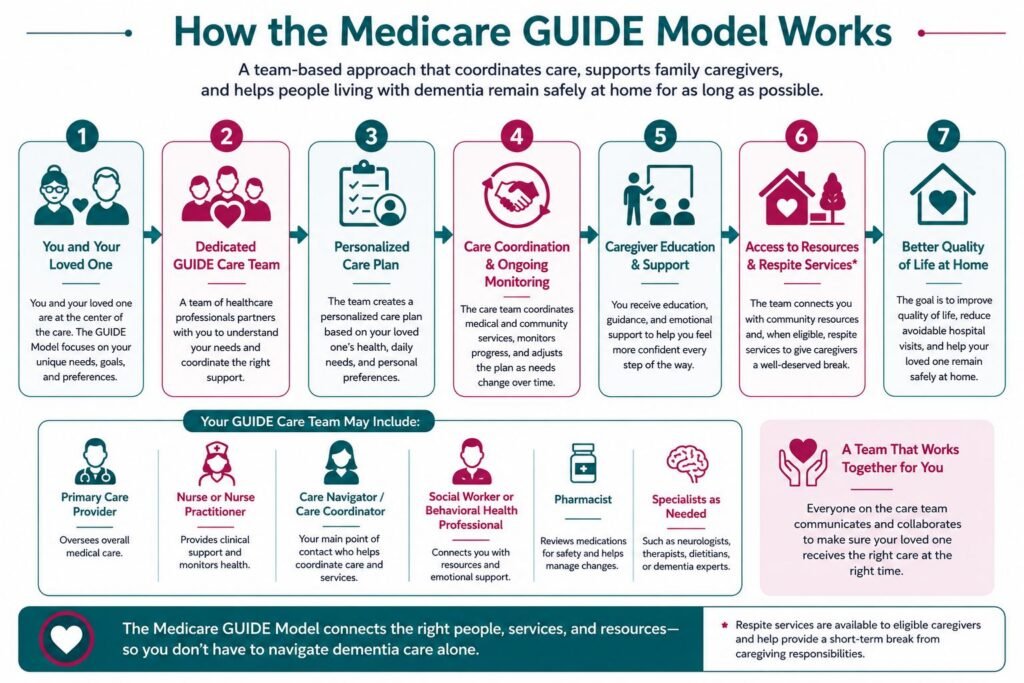
While the exact care team may vary depending on the participating healthcare organization, it often includes:
- Primary care provider or physician who oversees the individual’s overall medical care.
- Care navigator or care coordinator who serves as the family’s primary point of contact, helps coordinate services, schedules follow-ups, and answers questions.
- Nurses or nurse practitioners who monitor health conditions, provide clinical support, and help manage ongoing care.
- Social workers or behavioral health professionals who connect families with community resources, counseling, support groups, and other services.
- Other specialists, such as neurologists, geriatricians, pharmacists, therapists, or dementia care experts, who may become involved based on the individual’s specific needs.
Together, the care team develops a personalized care plan that reflects the person’s medical condition, daily needs, personal preferences, and caregiving situation. They also regularly review the plan and make adjustments as the disease progresses or circumstances change.
How the Care Team Supports Families
The GUIDE Model is designed to keep communication simple and coordinated. Rather than contacting multiple providers independently, families have a central point of contact who helps guide them through the healthcare system and connects them with available services.
The GUIDE Care Journey
Assessment → GUIDE Care Team → Personalized Care Plan → Care Coordination → Caregiver Support → Community Resources & Eligible Respite Care → Goal: Better Quality of Life
This team-based approach helps families feel more supported while improving communication among healthcare providers and ensuring care remains focused on the individual’s changing needs.
Services Families May Receive Through the Medicare GUIDE Model
The Medicare GUIDE Model is designed to support both the person living with dementia and the family members or friends who care for them. While services vary depending on the participating healthcare organization and each individual’s needs, eligible participants may receive the following types of support:
Care Coordination
A dedicated care team helps coordinate medical appointments, specialists, community services, and other aspects of dementia care. This coordinated approach improves communication among healthcare providers and helps families navigate the healthcare system more confidently.
Personalized Care Planning
The care team works with the individual and their caregiver to develop a personalized care plan based on medical needs, daily routines, personal preferences, and care goals. The plan is reviewed periodically and updated as the individual’s needs change.
Medication Review
The GUIDE care team may review medications as part of the overall care planning process, helping identify potential concerns and ensuring medications are managed safely in coordination with the individual’s healthcare providers.
Behavioral Support
Families may receive guidance on understanding and managing common behavioral and psychological symptoms associated with dementia. This may include strategies to improve communication, reduce potential triggers, and respond to challenging behaviors in ways that promote safety and well-being.
Caregiver Education
Family caregivers receive education about dementia, disease progression, caregiving strategies, safety considerations, and available community resources. The goal is to help caregivers feel more confident and better prepared for the challenges of caring for someone living with dementia.
24/7 Access to Support
Participating GUIDE providers are required to offer caregivers access to support at any time of the day or night for urgent needs or questions. Having around-the-clock access to guidance can provide reassurance and help families determine the most appropriate next steps when concerns arise.
Respite Care
Eligible caregivers may receive respite services through the GUIDE Model. Respite care provides temporary relief from caregiving responsibilities, allowing caregivers time to rest, attend appointments, or take care of their own health while their loved one continues to receive appropriate care.
Community Resources
The GUIDE care team helps connect families with community resources that may include support groups, transportation services, meal programs, legal or financial resources, caregiver support organizations, and other local services that can help meet the changing needs of both the individual and the caregiver.
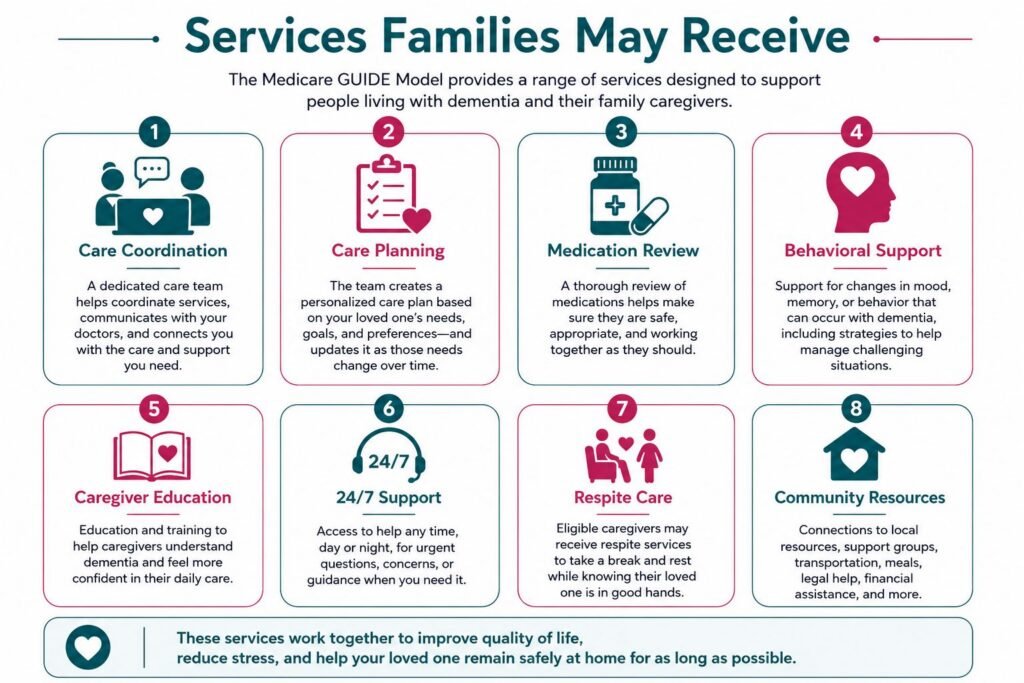
Together, these services create a more coordinated, person-centered approach to dementia care. By supporting both the individual living with dementia and their caregiver, the Medicare GUIDE Model aims to improve quality of life, reduce caregiver burden, and help eligible individuals remain safely in their homes and communities for as long as appropriate.
Who Qualifies for the Medicare GUIDE Model?
Not everyone living with dementia is eligible to participate in the Medicare GUIDE Model. Medicare has established specific eligibility requirements, and enrollment is only available through healthcare organizations that participate in the program.
In general, the program is intended for Medicare beneficiaries with a confirmed dementia diagnosis who meet Medicare’s participation criteria. Eligibility may also depend on factors such as where the individual lives, their current healthcare services, and whether they receive care from a participating GUIDE provider.
If your loved one has recently been diagnosed with Alzheimer’s disease—the most common cause of dementia—understanding the condition and how it progresses can help you better prepare for future care decisions. Learn more in our guide, Alzheimer’s Disease Explained: Symptoms, Stages, Causes, and Care Options for Families.
Because every situation is unique, it’s important to speak with your doctor or care team to determine whether the GUIDE Model is available and appropriate for your loved one.
Does the Medicare GUIDE Model Pay for Assisted Living?
No. The Medicare GUIDE Model does not pay for the cost of living in an assisted living community, including room and board. Instead, it provides care coordination and caregiver support services for eligible individuals living with dementia.
In some situations, a person living in an assisted living community may still be able to receive GUIDE services if they meet Medicare’s eligibility requirements and receive care from a participating GUIDE provider. However, eligibility depends on several factors, including the individual’s living arrangement and the policies governing the GUIDE Model.
If your loved one currently lives in, or is planning to move to, an assisted living community, it’s important to ask whether GUIDE services can continue and how they may work alongside the care already provided by the community.
Does the Medicare GUIDE Model Cover Nursing Homes?
No. The Medicare GUIDE Model is not intended for people who are long-term residents of a nursing home. One of the program’s goals is to help eligible individuals living with dementia remain safely in their homes or community-based residential settings for as long as appropriate through coordinated care and caregiver support.
If your loved one already resides in a long-term nursing home, they generally will not qualify for GUIDE services. Instead, the nursing home is responsible for coordinating the resident’s care and meeting their ongoing medical and personal care needs. If you’re exploring long-term care options, it’s important to understand that the GUIDE Model is designed to complement care provided in the community—not replace nursing home services or pay for long-term nursing home care.
Families considering a move to a nursing home should discuss how that transition may affect eligibility with their healthcare provider or GUIDE care team.
Does the Medicare GUIDE Model Replace Home Health Care?
No. The Medicare GUIDE Model does not replace Medicare-covered home health care. Instead, the two programs can work together to support eligible individuals living with dementia.
Home health care provides skilled medical services, such as nursing care, physical therapy, occupational therapy, speech therapy, and other clinical services ordered by a physician. The GUIDE Model focuses on care coordination, caregiver education, dementia care planning, behavioral support, and connecting families with community resources.
For example, a person recovering from an illness or hospitalization may receive home health services while also participating in the GUIDE Model for ongoing dementia care and caregiver support. Together, these services provide a more comprehensive approach to meeting both medical and caregiving needs.
Medicare GUIDE Model vs Home Health Care vs Hospice
Many families confuse the Medicare GUIDE Model with home health care and hospice because all three programs can support older adults with serious health conditions. However, each serves a different purpose. The table below highlights some of the key differences.
| Feature | GUIDE Model | Home Health Care | Hospice Care |
| Primary purpose | Dementia care coordination and caregiver support | Skilled medical care at home | Comfort-focused care for people with a terminal illness |
| Dementia care coordination | ✓ | No | No |
| Skilled nursing services | No | ✓ | ✓ |
| Caregiver education | ✓ | Limited | ✓ |
| Care planning | ✓ | ✓ | ✓ |
| Behavioral support for dementia | ✓ | Limited | Limited |
| Community resource referrals | ✓ | Limited | ✓ |
| Respite care | ✓* | No | ✓ |
| End-of-life care | No | No | ✓ |
| Goal | Help eligible individuals remain safely at home while supporting caregivers | Treat or help recover from illness or injury at home | Maximize comfort and quality of life during the final stage of illness |
*Respite care is available only for eligible caregivers participating in the Medicare GUIDE Model.
GUIDE vs Hospice: What’s the Difference?
Although both the Medicare GUIDE Model and hospice provide support for individuals with serious health conditions and their families, they serve different purposes.

The GUIDE Model is designed for eligible people living with dementia and focuses on coordinating care, supporting family caregivers, and helping individuals remain safely at home for as long as appropriate. Participants continue to receive medical treatment for dementia and other health conditions while benefiting from ongoing care coordination and caregiver support.
Hospice care, on the other hand, is intended for individuals with a terminal illness who have a life expectancy of approximately six months or less if the illness follows its expected course. Hospice focuses on comfort, symptom management, and quality of life rather than curative treatment, while also providing emotional and spiritual support for both the individual and their family.
In some situations, a person enrolled in the GUIDE Model may later transition to hospice as their condition progresses and their care needs change.
Benefits of the Medicare GUIDE Model for Family Caregivers
Family caregivers are at the heart of the Medicare GUIDE Model. While the program is designed to improve care for people living with dementia, it also recognizes that caregivers need guidance, education, and support to continue providing safe and effective care.
Whether you’re caring for a spouse, parent, sibling, or close friend, the GUIDE Model is intended to help you feel more confident, less overwhelmed, and better connected to the resources available in your community.
You Don’t Have to Navigate Dementia Care Alone
One of the greatest challenges families are facing is figuring out what to do next. From scheduling appointments and coordinating specialists to managing medications and understanding changing symptoms, dementia care can quickly become overwhelming.
The GUIDE Model provides a dedicated care team that helps coordinate services, answer questions, and guide families through each stage of the disease. Instead of trying to manage everything on your own, you’ll have experienced professionals who can help you make informed decisions.
Better Care Coordination Means Less Stress
People living with dementia often see multiple healthcare providers, including primary care physicians, neurologists, therapists, and specialists. Without proper communication, important information can be overlooked.
The GUIDE Model helps improve coordination among healthcare providers, reducing confusion, preventing duplicate services, and helping everyone involved work toward the same care goals.
Education Helps Caregivers Feel More Prepared
Dementia changes over time, and so do caregiving responsibilities. Many caregivers worry about whether they’re responding appropriately to changes in memory, behavior, or daily functioning.
Through the GUIDE Model, caregivers receive education about:
- Understanding dementia and its progression
- Managing behavioral changes
- Improving communication
- Creating safer home environments
- Planning for future care needs
- Accessing community resources
Having reliable information can make caregiving feel more manageable and reduce uncertainty.
Access to Community Resources
Many families are unaware of the programs available to help them. Depending on their location and individual needs, caregivers may be connected with:
- Dementia support groups
- Adult day programs
- Transportation services
- Meal delivery programs
- Legal and financial planning resources
- Caregiver support organizations
- Local aging services
These resources can provide practical assistance while reducing some of the daily challenges caregivers face.
Respite Care Provides Time to Recharge
Providing care for someone with dementia is rewarding, but it can also be physically and emotionally demanding. Taking occasional breaks is essential for maintaining your own health and well-being.
Eligible caregivers may have access to respite services through the GUIDE Model, allowing another qualified caregiver to temporarily care for their loved one. Whether it’s for a few hours or several days, respite care gives caregivers time to attend appointments, spend time with family, or simply rest.
Around-the-Clock Support Offers Peace of Mind
Questions and concerns don’t always arise during regular business hours. Depending on the participating GUIDE provider, caregivers may have access to 24/7 support for urgent questions or unexpected situations.
Knowing that help is available when it’s needed most can reduce anxiety and help families respond more confidently during difficult moments.
Helping Families Plan for the Future
As dementia progresses, care needs often change. The GUIDE Model encourages families to plan ahead by discussing future care preferences, available services, and community resources before a crisis occurs.
Having these conversations early can make future decisions less stressful and help ensure care continues to reflect the individual’s wishes and needs.
Supporting the Caregiver Supports the Person Living with Dementia
Research consistently shows that when caregivers receive the education, resources, and support they need, the person living with dementia often experiences better outcomes as well. By reducing caregiver stress, improving communication, and coordinating care more effectively, the Medicare GUIDE Model benefits the entire family—not just the individual with dementia.
For many families, having knowledgeable professionals to turn to can make the dementia journey feel less overwhelming and provide reassurance that they are not facing it alone.
Questions Families Should Ask About the Medicare GUIDE Model
If you believe your loved one may benefit from the Medicare GUIDE Model, it’s important to gather as much information as possible before enrolling. Asking the right questions can help you understand whether the program is a good fit, what services are available, and what to expect throughout the care journey.
Consider asking your doctor, care navigator, or participating GUIDE provider questions such as:
- Is my loved one eligible for the Medicare GUIDE Model?
- Do you participate in the GUIDE Model, or can you refer us to a participating provider?
- What services are included through your GUIDE program?
- Who will be our primary point of contact?
- How often will we meet with the care team?
- What caregiver education and training do you provide?
- Are respite care services available, and if so, how do they work?
- Can GUIDE services be provided if my loved one lives in assisted living or another senior living community?
- Can my loved one continue receiving home health care while participating in GUIDE?
- What happens if my loved one’s condition worsens or they eventually need hospice or nursing home care?
- Will there be any out-of-pocket costs?
- How do we enroll if we decide to participate?
Having these questions prepared before your appointment can help you make the most of your conversation and ensure you understand the services and support available.
Download Our Free Medicare GUIDE Conversation Checklist
Preparing for an appointment with a participating GUIDE provider can help you get the information you need to make informed decisions. Our free Medicare GUIDE Conversation Checklist includes questions about eligibility, services, caregiver support, respite care, costs, future planning, and more—along with space to take notes during your appointment.
Final Thoughts
Receiving a dementia diagnosis can leave families with many questions about what comes next. While no single program can eliminate the challenges of dementia, the Medicare GUIDE Model represents an important step toward providing more coordinated, compassionate care for both individuals living with dementia and the family members who support them.
By bringing together healthcare professionals, offering caregiver education, coordinating services, and connecting families with valuable community resources, the GUIDE Model helps make navigating dementia care less overwhelming. For eligible individuals, it can provide the guidance and support needed to remain safely at home and improve quality of life.
If you think your loved one may qualify, talk with their doctor or healthcare provider about whether the Medicare GUIDE Model is available in your area and whether it may be appropriate for their needs.
At Long-Term Care Finder, we’re committed to helping families make informed decisions every step of the caregiving journey. Explore our educational resources to learn more about dementia care, compare long-term care options, and connect directly with assisted living communities, memory care providers, home health agencies, hospice organizations, nursing homes, and other senior care services—all without referral agents or commission-based recommendations.
Frequently Asked Questions About the Medicare GUIDE Model
The Medicare GUIDE Model is a new program, and many families have questions about how it works and whether it may benefit their loved one. The answers below address some of the most common questions caregivers ask.
What is the Medicare GUIDE Model?
The Medicare GUIDE Model (Guiding an Improved Dementia Experience) is a Medicare program that improves dementia care by providing care coordination, caregiver education, behavioral support, and access to community resources. Its goal is to help eligible people living with dementia remain safely at home while reducing caregiver stress.
Who is eligible for the Medicare GUIDE Model?
In general, the program is intended for Medicare beneficiaries with a confirmed dementia diagnosis who meet Medicare’s eligibility requirements and receive care from a participating GUIDE provider. Eligibility depends on several factors, so families should speak with their healthcare provider for an individual assessment.
Does the Medicare GUIDE Model cost anything?
The GUIDE Model is a Medicare program, but out-of-pocket costs can vary depending on the services received and an individual’s Medicare coverage. Ask your GUIDE provider to explain any potential costs before enrolling.
Does the GUIDE Model pay for assisted living?
No. The GUIDE Model does not pay for assisted living room and board. It provides care coordination and caregiver support services rather than housing or long-term residential care.
Can someone living in assisted living receive GUIDE services?
Possibly. In some situations, individuals living in assisted living or other community-based settings may still qualify for GUIDE services. Eligibility depends on Medicare requirements and the participating GUIDE provider.
Does the GUIDE Model replace home health care?
No. Home health care and the GUIDE Model serve different purposes. Home health provides skilled medical services, while GUIDE focuses on dementia care coordination, caregiver support, and connecting families with resources. Some individuals may receive both services at the same time.
Is the GUIDE Model the same as hospice?
No. The GUIDE Model supports people living with dementia throughout the course of the disease, while hospice is intended for individuals with a terminal illness who have a life expectancy of about six months or less. Hospice focuses on comfort and quality of life rather than curative treatment.
Does the GUIDE Model provide respite care?
Yes, eligible caregivers may have access to respite services through the GUIDE Model. The availability and amount of respite care depend on the individual’s needs and the participating GUIDE provider.
Does the GUIDE Model replace my loved one’s doctor?
No. The GUIDE care team works alongside your loved one’s existing physicians and specialists. It helps coordinate care, improve communication among providers, and support both the individual and their caregiver.
How do I enroll in the Medicare GUIDE Model?
Enrollment is available through healthcare organizations participating in the GUIDE Model. Start by asking your primary care physician, neurologist, or dementia care provider whether they participate or can refer you to a participating organization.
Where can I find a participating GUIDE provider?
Not every healthcare organization participates in the Medicare GUIDE Model. Ask your doctor, contact your local healthcare system, or visit Medicare resources to determine whether GUIDE services are available in your area.
Is the Medicare GUIDE Model available nationwide?
The GUIDE Model is being implemented through selected healthcare organizations across the United States. Availability varies by location, so families should check whether a participating provider serves their community.
Related Resources
Continue learning about dementia care, caregiving, and long-term care planning with these helpful guides from Long-Term Care Finder:
- Family Caregiver Burnout: Warning Signs, Causes, and Support Every Caregiver Needs
- Senior Care Planning: How to Plan for Long-Term Care Before a Crisis Happens
- Hospital Discharge Planning for Seniors: Essential Steps to Choose the Right Care After a Hospital Stay
- When Is It Time for Assisted Living? 12 Signs an Older Adult May Need More Support
- Long-Term Care Explained: A Complete Guide for Families Navigating Senior Care
- Hospice Care Explained: A Complete Guide for Families Facing End-of-Life Care