
For many families facing a serious illness, searching “what is palliative care” often begins during an overwhelming and emotional time. When someone you love is navigating complex medical challenges, the focus is often placed on treatments, appointments, and difficult decisions. But many families quickly realize something else matters just as much: comfort, quality of life, emotional support, and help managing the stress that serious illness can bring.
Palliative care focuses on relieving symptoms, improving comfort, and supporting both patients and families throughout the course of illness. Many people are surprised to learn that palliative support is not only for the end of life. In fact, it can begin at almost any stage of a serious illness and may be provided alongside ongoing medical treatment.
Families looking for additional information about palliative care and serious illness support can also explore resources from the National Institute on Aging and the Center to Advance Palliative Care (CAPC).
For families navigating difficult medical situations, understanding palliative care can bring greater clarity, support, and peace of mind throughout the care journey.
What Is Palliative Care?
Palliative care is specialized medical care focused on improving comfort, relieving symptoms, and supporting quality of life for people living with serious illnesses. It can be provided alongside medical treatment and also supports families emotionally and practically throughout the illness journey.
The goal is not only to manage disease, but also to relieve symptoms, reduce stress, and help patients and families navigate difficult medical situations with greater clarity and support.
Palliative care teams commonly help with:
- Pain and symptom management
- Shortness of breath or breathing difficulties
- Fatigue, weakness, and sleep problems
- Nausea, appetite loss, or medication side effects
- Anxiety, depression, and emotional distress
- Stress and emotional support for families and caregivers
- Communication between healthcare providers
- Understanding treatment options and medical decisions
- Advance care planning conversations and future care wishes
Palliative care is centered around the individual’s comfort, goals, values, and overall well-being. Care plans are personalized to each person’s needs and may change over time as health conditions evolve.
Unlike hospice care, it can be provided at any stage of a serious illness — including while someone is still receiving treatments intended to cure, slow, or manage their condition.
Who Can Benefit from Palliative Care Services?

Palliative care may benefit individuals living with many serious, chronic, or progressive health conditions. It is designed to support people experiencing symptoms, discomfort, emotional stress, or complex medical challenges related to illness.
It is commonly recommended for individuals living with:
- Cancer
- Heart disease or congestive heart failure
- COPD and advanced lung disease
- Kidney disease or kidney failure
- Alzheimer’s disease and other forms of dementia
- Stroke-related complications
- Neurological conditions such as ALS
- Advanced diabetes complications
- Serious infections or medically complex illnesses
People recovering from major surgeries, frequent hospitalizations, or ongoing treatments may also benefit from palliative support.
Families navigating specific medical conditions may find additional education and support through organizations such as the Alzheimer’s Association, the American Heart Association, and the National Cancer Institute.
Importantly, palliative support is not based solely on age, prognosis, or whether someone is nearing the end of life. Many individuals receive it for months or even years while continuing medical treatment, rehabilitation, or daily routines.
The purpose is to improve comfort, reduce stress, manage symptoms, and help individuals maintain the best possible quality of life throughout the course of illness.
What Does Palliative Care Help With?
One of the most important things families should understand is that palliative care supports far more than physical symptoms alone. It focuses on improving overall quality of life by addressing the physical, emotional, and practical challenges that often come with serious illness.
For many individuals, symptoms related to illness or treatment can affect comfort, sleep, appetite, energy levels, mobility, and daily routines. Over time, these challenges can become physically and emotionally exhausting for both patients and families.
Physical Symptom Relief
A major focus of palliative care is helping individuals feel more comfortable and supported throughout treatment and recovery. Palliative care specialists work closely with patients, families, and healthcare providers to manage symptoms and reduce distress whenever possible.
Palliative care may help manage symptoms such as:
- Pain
- Shortness of breath or breathing difficulties
- Chronic fatigue and weakness
- Nausea and vomiting
- Loss of appetite or difficulty eating
- Sleep problems and insomnia
- Constipation or digestive discomfort
- Anxiety related to symptoms or treatment
- Medication side effects and treatment complications
The goal is not only to relieve discomfort, but also to help individuals maintain as much independence, function, and quality of life as possible throughout the course of illness.
Emotional and Mental Health Support
Serious illness affects far more than physical health alone. Many individuals and families also experience significant emotional stress, uncertainty, and mental exhaustion while navigating medical treatments, changing health conditions, and difficult decisions.
It is common for patients and caregivers to experience:
- Anxiety and worry
- Fear about the future
- Depression or emotional distress
- Caregiver stress and burnout
- Grief, sadness, or anticipatory grief
- Feelings of isolation or overwhelm
- Emotional exhaustion from ongoing medical challenges
Palliative care recognizes that emotional well-being is an important part of overall care and quality of life. Support is designed not only for the individual receiving care, but also for the family members and caregivers walking alongside them.
Teams providing palliative services may include counselors, social workers, chaplains, therapists, or emotional support specialists who help families process difficult emotions, navigate uncertainty, and cope with the ongoing challenges of serious illness.
For many families, simply having compassionate guidance, honest conversations, and emotional support during difficult moments can make a meaningful difference throughout the care journey.
Support for Families and Caregivers
Families caring for a loved one with a serious illness often carry significant emotional, physical, and practical responsibilities. Over time, managing appointments, medications, caregiving tasks, and difficult decisions can become overwhelming — especially when combined with fear, uncertainty, and concern for a loved one’s well-being.
Families navigating broader senior care decisions may also find our guide Long-Term Care Explained: A Complete Guide for Families Navigating Senior Care helpful for understanding different levels of care and support options.
Palliative care not only supports the individual receiving care, but also helps families and caregivers navigate the many challenges that can come with serious illness.
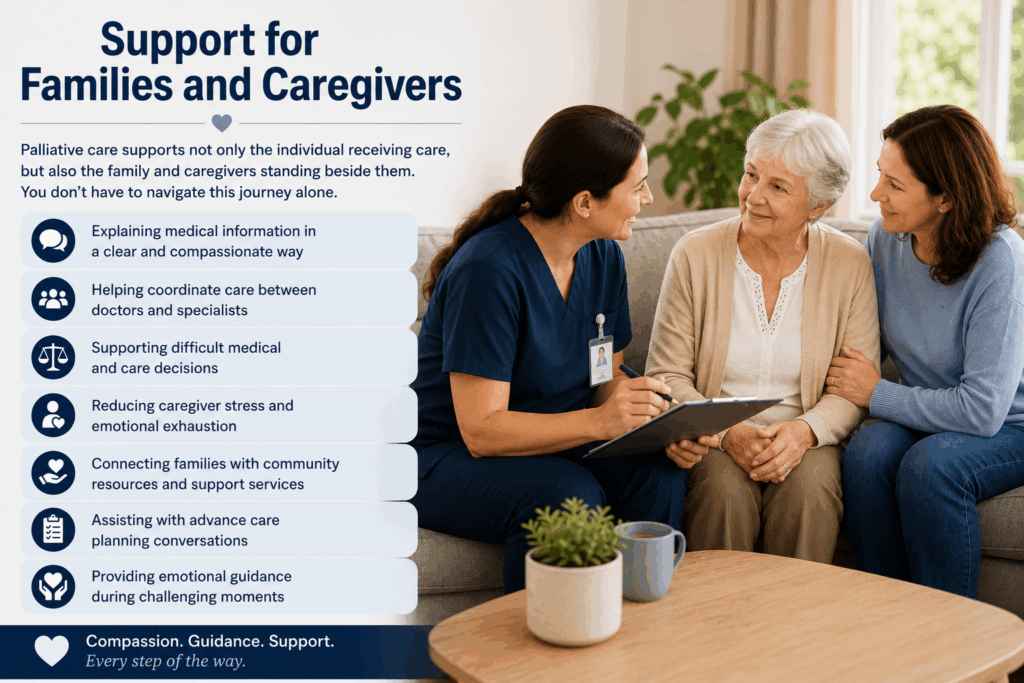
Palliative support teams may help families by:
- Explaining medical information in a clear and compassionate way
- Helping coordinate care between doctors and specialists
- Supporting difficult medical and care decisions
- Reducing caregiver stress and emotional exhaustion
- Connecting families with community resources and support services
- Assisting with advance care planning conversations
- Providing emotional guidance during challenging moments
Many caregivers quietly experience burnout long before they ask for help. The emotional weight of caregiving can affect mental health, relationships, sleep, work responsibilities, and overall well-being.
Early support can help families feel more informed, supported, and less alone throughout the illness journey — improving quality of life not only for the patient, but for everyone involved in their care.
Caregivers looking for additional education and support may also benefit from resources provided by the Family Caregiver Alliance, which offers guidance, educational materials, and support resources for families managing serious illness and long-term care responsibilities.
Families experiencing caregiver stress may also find our article Family Caregiver Burnout: Warning Signs, Causes, and Support Every Caregiver Needs helpful for recognizing signs of emotional exhaustion and learning ways to seek support before burnout becomes overwhelming.
What Is the Difference Between Palliative Care and Hospice Care?
One of the most common misunderstandings families have is believing that palliative care and hospice care are the same thing. While both focus on comfort, symptom relief, and quality of life, they serve different purposes and may begin at different stages of illness.
Understanding the difference can help families make more informed care decisions and feel more confident about the support available throughout the care journey.
Palliative Care
Palliative care is specialized support for individuals living with serious illnesses and can begin at almost any stage of a condition — even during active treatment.
Palliative care:
- Can begin early in the course of a serious illness
- May be provided alongside treatments intended to cure, slow, or manage disease
- Focuses on symptom relief, comfort, and quality of life
- Helps support emotional well-being and reduce stress
- Can continue for months or even years depending on a person’s needs
The goal of palliative support is to improve daily life while helping patients and families navigate the physical, emotional, and practical challenges of illness.
Hospice Care
Hospice care is a specialized type of end-of-life care focused entirely on comfort and quality of life when curative treatment is no longer effective, desired, or appropriate.
Hospice care:
- Is generally intended for individuals with a limited life expectancy
- Focuses on comfort rather than curative treatment
- Helps manage pain and symptoms during the final stage of illness
- Provides emotional, spiritual, and practical support for patients and families
- Often includes support for caregivers and grief resources for loved ones
Hospice care is centered on dignity, comfort, and meaningful support during the final stage of life.
Palliative Care vs. Hospice Care
While palliative care and hospice care share similar goals of comfort and support, there are important differences between the two types of care.
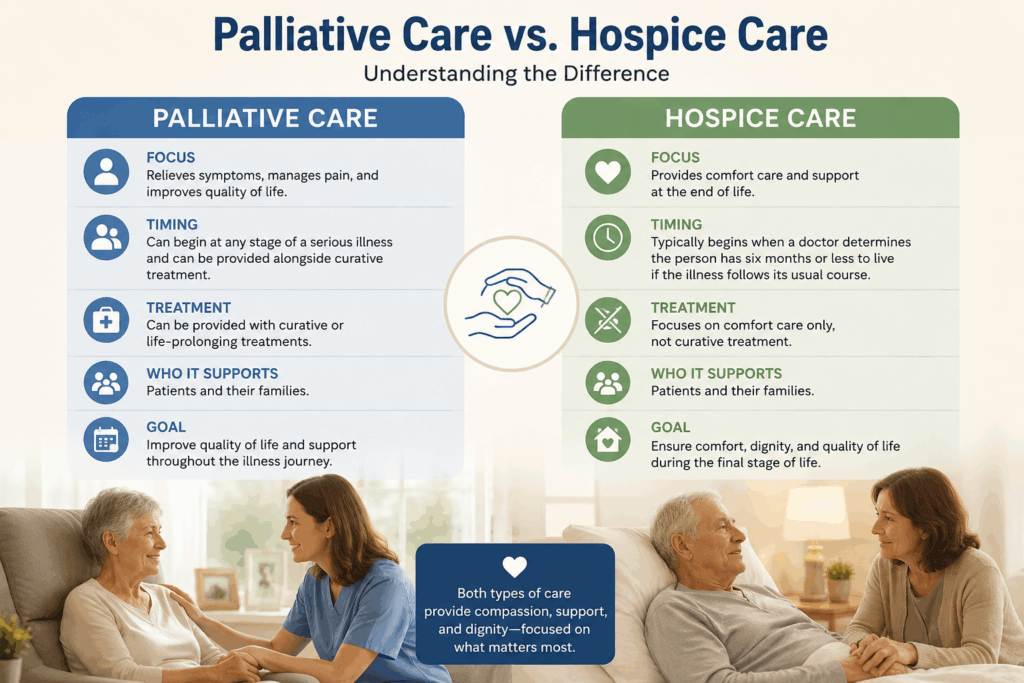
| Feature | Palliative Care | Hospice Care |
| When care can begin | At any stage of serious illness | Typically, during the final stage of life |
| Curative treatment | May continue alongside treatment | Usually focused on comfort rather than cure |
| Main focus | Symptom relief, comfort, and quality of life | End-of-life comfort and support |
| Length of care | Months or even years | Often shorter-term end-of-life care |
| Emotional support | Yes | Yes |
| Family support | Yes | Yes |
| Care settings | Hospitals, clinics, facilities, or home | Home, hospice facilities, nursing homes, assisted living |
| Goal of care | Improve quality of life during illness | Provide comfort, dignity, and support at end of life |
Families wanting a deeper understanding of end-of-life support may also find our guide Hospice Care Explained: A Complete Guide for Families Navigating End-of-Life Care helpful when exploring comfort-focused care options and understanding how hospice services support both patients and caregivers.
For additional information about palliative care and hospice care, families can explore:
- National Institute on Aging – Palliative Care and Hospice Care
- Center to Advance Palliative Care (CAPC)
- https://www.medicare.gov/
When Should Someone Start Palliative Care?
Many families wait far too long before seeking palliative support because they mistakenly believe it is only for the final stages of life. In reality, palliative care can often provide the greatest benefit when introduced earlier in the course of a serious illness.
Early palliative care involvement may help improve comfort, reduce stress, support better communication between healthcare providers, and improve overall quality of life for both patients and families.
Palliative care may be helpful when:
- Symptoms become difficult to manage
- Pain, fatigue, or breathing problems begin affecting daily life
- Multiple doctors or specialists are involved in care
- A serious diagnosis feels emotionally overwhelming
- Frequent hospital visits or medical complications occur
- Quality of life is beginning to decline
- Families need additional guidance, support, or care coordination
- Medical decisions become increasingly complex or stressful
Starting palliative care earlier does not mean giving up on treatment or hope. Instead, it adds an extra layer of support focused on comfort, communication, symptom management, and overall well-being throughout the illness journey.
For many families, early support provides more time to ask questions, plan ahead, reduce uncertainty, and focus on what matters most: comfort, connection, and quality of life.
Where Is Palliative Care Provided?
Palliative care services can be provided in a variety of healthcare and residential settings depending on a person’s medical condition, level of support needed, and overall care goals. Because palliative care is flexible, services are often tailored to meet individuals wherever they are receiving care.
Services may be provided in:
- Hospitals
- Outpatient clinics or medical offices
- Nursing homes or skilled nursing facilities
- Assisted living communities
- Residential care homes
- Private homes through home health care or specialized palliative programs
Some individuals receive palliative care temporarily after a hospitalization, surgery, or serious medical event, while others continue receiving support for months or even years while managing chronic or progressive illness.
In many cases, palliative care works alongside existing doctors, specialists, rehabilitation services, or home health providers to help improve comfort, coordinate care, and support quality of life.
Families exploring different care settings may also find these resources helpful:
Who Provides Palliative Care?
Palliative care is typically provided by a team of healthcare professionals who work together to support both the patient and their family throughout the course of illness. Because serious medical conditions often affect many areas of life, palliative care takes a team-based approach focused on comfort, communication, emotional support, and overall well-being.

The palliative care team may include:
- Doctors and palliative care specialists
- Nurses and nurse practitioners
- Social workers
- Counselors or mental health professionals
- Chaplains or spiritual support providers
- Physical, occupational, or speech therapists
- Care coordinators and case managers
Each member of the team plays a different role in helping manage symptoms, reduce stress, provide emotional support, and coordinate care.
Importantly, palliative care teams work alongside a person’s existing doctors and specialists — not in place of them. Their role is to provide an additional layer of support that helps patients and families better navigate the physical, emotional, and practical challenges of serious illness.
This collaborative approach can help improve communication between providers, ensure care aligns with a person’s goals and wishes, and help families feel more supported throughout the care journey.
Does Insurance Cover Palliative Care?
Insurance coverage for palliative care can vary depending on several factors, including a person’s medical condition, insurance plan, care setting, and the specific services being provided.
Coverage may depend on:
- The insurance provider and policy details
- The individual’s diagnosis and medical needs
- Whether care is provided in a hospital, clinic, facility, or at home
- The types of services included in the care plan
Many palliative care services may be covered through:
- Medicare
- Medicaid
- Private insurance plans
- Some employer-sponsored or supplemental health plans
Depending on the situation, coverage may include medical visits, symptom management, nursing support, counseling services, care coordination, and certain therapies related to serious illness support.
Because benefits and eligibility can vary widely, families should speak directly with healthcare providers, palliative care programs, and insurance companies to better understand what services may be covered and whether referrals or approvals are required.
For additional information, families can visit: Medicaid.gov and Medicare.gov.
Common Misunderstandings About Palliative Care
Many families are unfamiliar with palliative care until they are facing a serious illness themselves. Because of this, there are several common misunderstandings that can cause people to delay seeking valuable support and guidance.
“Palliative care means giving up.”
This is one of the most common myths about palliative care.
Palliative care is not about giving up hope or stopping treatment. Instead, it focuses on improving comfort, relieving symptoms, reducing stress, and helping individuals maintain the best possible quality of life throughout illness.
Many people continue active medical treatments — including chemotherapy, rehabilitation, surgeries, or other therapies — while also receiving palliative care support.
The goal is to help patients feel more comfortable, supported, and better able to navigate the challenges of serious illness.
“Palliative care is only for people at the end of life.”
Although palliative care and hospice care share similar goals of comfort and support, they are not the same thing.
Palliative support can begin much earlier than many families realize and may be provided at any stage of a serious illness — sometimes for months or even years.
Some individuals receive palliative support while continuing treatment, managing chronic illness, recovering after hospitalization, or adjusting to long-term medical conditions.
Early palliative support involvement may help improve quality of life long before end-of-life care becomes necessary.
“Only older adults receive palliative care.”
While many seniors benefit from palliative care, support is not limited to older adults.
People of all ages living with serious or chronic illnesses may receive palliative care, including younger adults and individuals managing long-term medical conditions.
Palliative support is based on a person’s needs, symptoms, and quality of life — not simply their age.
Questions Families Should Ask About Palliative Care Services
Exploring palliative care can feel overwhelming at first, especially for families already managing the stress of a serious illness. Asking thoughtful questions can help families better understand available services, clarify expectations, and feel more confident about the support being offered.
When speaking with a palliative care provider or healthcare team, families may want to ask:
- What services are included in palliative care?
- Who is part of the care team?
- Can palliative care be provided at home?
- How are pain and symptoms managed?
- How often will visits or check-ins occur?
- Does insurance cover palliative care services?
- How does the palliative support team coordinate with existing doctors and specialists?
- What emotional or mental health support is available for patients and caregivers?
- Are spiritual support or counseling services available?
- How can families communicate concerns or ask questions between visits?
These conversations can help families better understand their options, reduce uncertainty, and make more informed decisions about care and support.
For many families, simply knowing there is a team focused on comfort, communication, and quality of life can provide meaningful reassurance during a difficult time.
How Palliative Support Improves Quality of Life
At its core, palliative care focuses on helping people live as comfortably, fully, and meaningfully as possible while navigating serious illness. Rather than focusing only on medical treatment, it looks at the whole person — including physical comfort, emotional well-being, daily life, and family support.
For some individuals, improved quality of life may mean better symptom management, increased comfort, or fewer emergency room visits and hospitalizations.
For others, it may mean:
- More meaningful time with family and loved ones
- Better communication with doctors and healthcare providers
- Reduced stress, anxiety, and emotional overwhelm
- Greater emotional and practical support
- More comfort during daily activities and routines
- Improved understanding of treatment options and care choices
- Feeling more heard, supported, and involved in care decisions

Palliative support also helps families feel less alone during difficult medical situations by providing guidance, reassurance, and ongoing support throughout the illness journey.
Most importantly, palliative care recognizes that serious illness affects every part of a person’s life — not just the diagnosis itself. The goal is to support comfort, dignity, and quality of life in a way that aligns with each individual’s personal values, wishes, and needs.
Every family’s situation is different, and many people still have questions about how palliative care works in real life. Below are answers to some of the most common questions families ask when exploring palliative care options.
Final Thoughts
Understanding what palliative care is can help families feel less overwhelmed and more supported during difficult medical situations. When serious illness affects daily life, comfort, emotional well-being, and quality of life become just as important as medical treatment itself.
Palliative care is not about giving up hope. It is about providing an extra layer of support focused on comfort, symptom management, communication, and overall well-being for both patients and families.
Whether someone is newly diagnosed, managing a chronic condition, recovering from a serious medical event, or facing increasing health challenges, palliative support can offer meaningful physical, emotional, and practical support throughout the illness journey.
For many families, it helps create more comfort, clearer communication, reduced stress, and greater peace of mind during an uncertain time.
Families exploring long-term care and support options may also find these resources helpful:
- Long-Term Care Explained: A Complete Guide for Families Navigating Senior Care
- Hospice Care Explained: A Complete Guide for Families Facing End-of-Life Care
- Senior Care Planning: How to Plan for Long-Term Care Before a Crisis Happens
- Hospital Discharge Planning for Seniors: Essential Steps to Choose the Right Care After a Hospital Stay
- Memory Care Explained: A Complete Guide for Families Navigating Alzheimer’s and Dementia Care
At longtermcarefinder.com, families can explore long-term care options, compare providers, and connect directly with care services that match their loved one’s needs, preferences, and level of support.
Frequently Asked Questions Families May Have
Families often have many questions when learning about palliative care, especially when navigating a serious illness for the first time. Understanding who qualifies for palliative care, when services should begin, how care is provided, and what support is available can help families make informed decisions. Below are answers to some of the most frequently asked questions about palliative care and how it supports both patients and caregivers.
What is palliative care in simple terms?
Palliative care is specialized medical support focused on improving comfort, quality of life, and symptom management for people living with serious illnesses. It also provides emotional and practical support for families and caregivers.
Is palliative care the same as hospice care?
No. Palliative care can begin at any stage of a serious illness and may be provided alongside curative treatment. Hospice care is generally intended for individuals nearing the end of life when treatment is no longer focused on curing illness.
When should someone start palliative care?
Palliative care can begin as soon as a serious illness starts affecting comfort, quality of life, emotional well-being, or daily functioning. Many families benefit from support earlier than they expect.
Can palliative care be provided at home?
Yes. Depending on the provider and care needs, palliative care may be offered at home, in hospitals, outpatient clinics, assisted living communities, nursing homes, or residential care homes.
Does Medicare cover palliative care?
Some palliative care services may be covered through Medicare, Medicaid, or private insurance plans. Coverage depends on the individual’s condition, provider, and specific services being offered.
Who qualifies for palliative care?
People living with serious, chronic, or progressive illnesses may qualify for palliative care services. This may include individuals with cancer, heart disease, COPD, dementia, Parkinson’s disease, kidney disease, and other complex medical conditions.
Does palliative care mean giving up?
No. Palliative care is not about giving up hope or stopping treatment. Its purpose is to improve comfort, reduce symptoms, and support quality of life while individuals continue receiving medical care.
How does palliative care help families?
Palliative care supports families by helping explain medical information, coordinate care, reduce caregiver stress, assist with difficult decisions, and provide emotional support throughout the illness journey.