
Caring for Others While Caring for Yourself
Running a residential care home is deeply meaningful work. Every day, you support residents through important moments in their lives, offer reassurance to families, and create a safe and supportive environment for people who rely on compassionate care.
But running a residential care home also comes with a level of responsibility that can be emotionally and physically demanding.
Unlike larger facilities where duties are divided across multiple departments, residential care homes often operate with small teams. Owners frequently find themselves balancing caregiving, staffing, compliance, paperwork, and family communication all at once.
Over time, the emotional weight of caregiving combined with daily operational responsibilities can quietly lead to burnout.
Recognizing the signs early and creating healthy ways to manage stress can help residential care home owners continue providing excellent care while protecting their own well-being.
The Emotional Reality of Running a Residential Care Home
Running a residential care home requires much more than managing a business.
Many owners are closely involved in the daily life of the home. You may help residents through difficult health changes, comfort families during uncertain moments, and make decisions that directly affect someone’s quality of life.
Because residential care homes are small and personal, relationships often grow naturally. Residents become familiar faces, daily routines become meaningful connections, and families place deep trust in your care.
This closeness is one of the strengths of residential care homes. It also means the emotional responsibility can follow you long after the workday ends.
For many owner-caregivers, the line between professional responsibility and personal compassion can become difficult to separate.
The Unique Weight Residential Care Home Owners Carry
People who are running a residential care home often live in two worlds at once.

On one side are the operational responsibilities:
- Licensing and regulatory compliance
- Staffing and scheduling
- Documentation and inspections
- Financial management
- Marketing and community outreach
- Communication with families
On the other side is the human side of care:
- Building relationships with residents
- Supporting families during transitions
- Navigating decline, illness, and end-of-life care
- Providing emotional reassurance
Because residential care homes operate on a smaller scale, owners often carry both sets of responsibilities simultaneously.
Many families searching for care begin by researching options online and learning about different types of senior care, including residential care homes, assisted living communities, and other long-term care settings. Resources such as longtermcarefinder.com, which helps families explore senior care providers in their area, are often part of that early search process.
For residential care home owners, this means balancing compassionate caregiving with the realities of operating a small care business.
Signs of Burnout When Running a Residential Care Home
Burnout rarely appears overnight. It often develops gradually as emotional demands and responsibilities continue to build.
Residential care home owners may notice warning signs such as:
- Feeling constantly tired, even after rest
- Becoming emotionally numb or unusually irritable
- Losing enthusiasm for work that once felt meaningful
- Feeling guilty when taking time away from the home
- Struggling to separate work responsibilities from personal life
- Feeling alone when making difficult decisions
These experiences are not signs of weakness. In fact, they often appear in people who care deeply about their residents and their work.
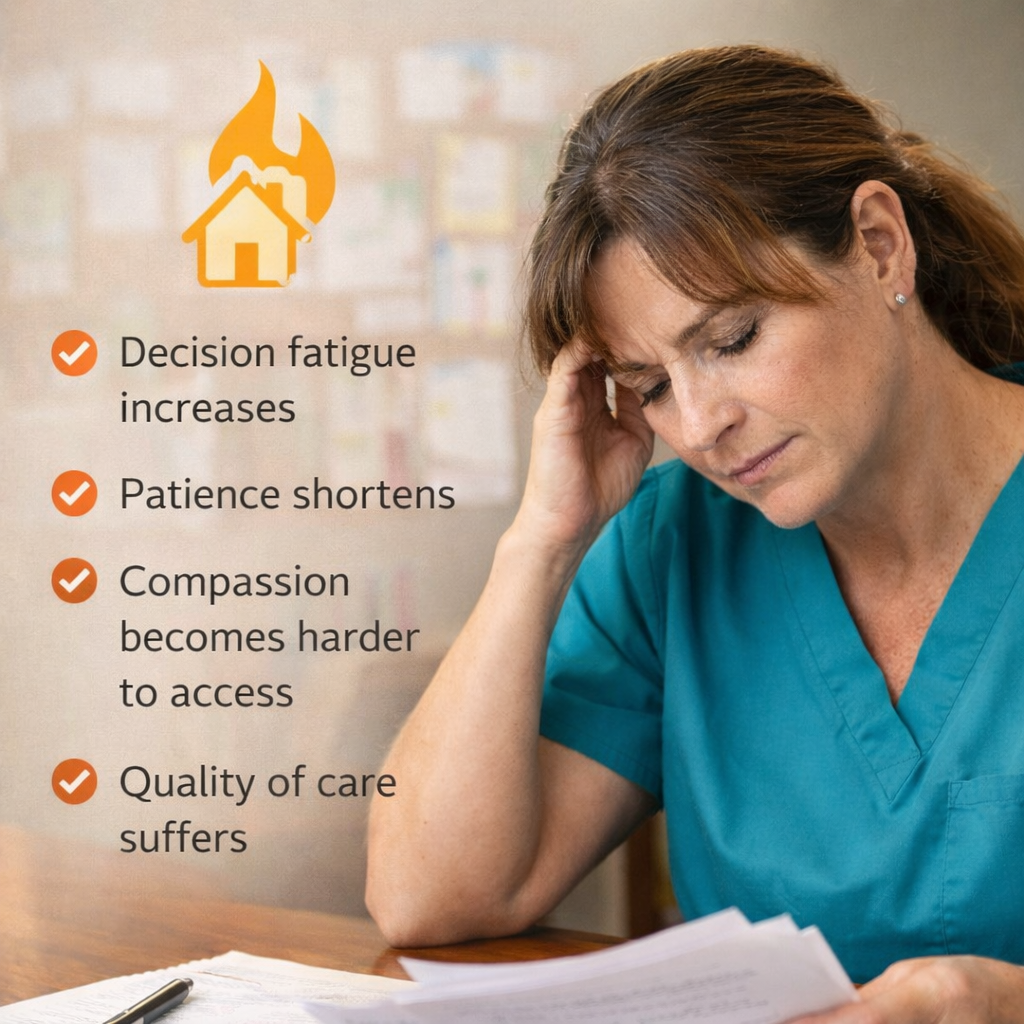
Research from the National Institute on Aging highlights that caregivers who experience ongoing emotional and physical demands are more vulnerable to stress and burnout if support systems are not in place.
Recognizing these signs early allows you to take steps that protect both your well-being and the quality of care you provide.
Why Burnout Is Especially Common in Small Residential Care Homes
In larger assisted living communities or nursing facilities, responsibilities are often shared across multiple departments.
When running a residential care home, however, much of that responsibility may fall on one person or a very small team.
Owners may be responsible for:
- Direct caregiving
- Administrative oversight
- Emergency decision-making
- Staff scheduling and training
- Communication with families
Over time, this level of responsibility can lead to decision fatigue and emotional exhaustion.
Protecting your own well-being is not separate from caring for residents. When caregivers are supported and rested, the quality of care they provide becomes more consistent, patient, and compassionate.
Healthy Ways to Prevent Burnout While Running a Residential Care Home
Preventing burnout does not mean caring less about your residents. It means finding sustainable ways to continue doing the work you value.
Many caregivers also benefit from learning practical systems that reduce daily overwhelm. If you are looking for simple ways to organize responsibilities and protect your energy, our guide on Caregiver Stress Management: Simple Systems That Reduce Daily Overwhelm offers helpful strategies that can support both caregivers and residential care home owners.
Acknowledge the emotional demands of caregiving
Running a residential care home involves emotional labor that many people outside the industry do not fully see. Acknowledging that reality can help you approach challenges with greater self-compassion.
Set healthy emotional boundaries
Compassion is essential in caregiving, but it is important to remember that you cannot carry every outcome personally. Focus on providing thoughtful care while recognizing that some situations are outside your control.
Protect time outside the home
Residential care home owners often feel responsible for being constantly available. Creating small periods of protected personal time can help restore energy and perspective.
Connect with other care providers
Speaking with other residential care home owners or caregivers can provide meaningful support. People working in similar environments understand the emotional realities of caregiving and can offer encouragement or advice.
Organizations such as the Family Caregiver Alliance also provide resources that help caregivers manage stress and maintain their well-being.
Revisit the reason you started
Many residential care home owners began their journey because they wanted to create a more personal and compassionate care environment.
Reconnecting with that original purpose can help restore a sense of direction during difficult periods.
Caring for Yourself Protects the Care You Provide
Residential care homes thrive when the people leading them are supported and well.
When owner-caregivers feel overwhelmed or exhausted, even the most dedicated professionals may struggle to maintain the patience and presence that caregiving requires.
Protecting your well-being helps ensure that residents continue receiving the thoughtful care they deserve.
You Are Not Meant to Carry This Alone
Many people who are running a residential care home quietly carry the emotional weight of caregiving without asking for support.
But caring for others does not mean neglecting yourself.
When residential care home owners have space to recharge, connect with peers, and protect their own well-being, the care they provide remains what it has always been meant to be: compassionate, steady, and deeply human.
Families searching for trusted senior care providers often begin by researching available options online. Platforms like longtermcarefinder.com help connect families with residential care providers in their area, making it easier for residential care homes to be discovered by people who truly need their services.
And for the caregivers and owners behind those homes, remembering to care for yourself is one of the most important steps in continuing this meaningful work.