
Caregiver stress management is not about becoming more productive or doing everything perfectly. It is about creating small, supportive systems that make daily life feel more manageable. Caring for someone you love is deeply meaningful, but it can also be exhausting. Many caregivers juggle appointments, medications, household responsibilities, emotional conversations, and their own work and family obligations—all at once. When everything feels urgent, even simple tasks can become overwhelming.
The truth is, reducing caregiver stress does not require a complete life overhaul. Often, it starts with creating practical systems that support your real life. These systems do not need to be complicated. They simply need to reduce mental clutter, bring clarity, and give you breathing room.
Whether you are a family caregiver or a care provider supporting families, these ideas can help bring more calm, confidence, and stability into everyday caregiving.
Why Caregiver Stress Management Requires Simple Systems
Caregiving often comes with constant decision-making.
- What medication is due next?
- Who is coming to help today?
- Are we running low on supplies?
- Did I already make that phone call?
Over time, this steady stream of decisions creates what many experts call “decision fatigue.” It drains emotional energy and increases the risk of burnout. Simple systems reduce the mental load. They:
- Minimize guesswork and second-guessing
- Create predictability during uncertain times
- Help prevent caregiver burnout
- Make it easier to accept help from others
- Protect emotional energy for what truly matters
A system is simply a repeatable way of handling something you already do. The goal is not control. The goal is relief.
1. Create a “Single Source of Truth”
One of the biggest stressors for caregivers is scattered information. Notes on scraps of paper, texts from siblings, appointment cards, and emails from providers can quickly become overwhelming.
Caregiver stress management becomes much easier when everything lives in one place.
Choose one place where everything lives:
- A simple binder or notebook
- A shared digital folder
- A notes app or document
- A shared family calendar
Include:
- Medical information and medications
- Appointment dates and contacts
- Emergency numbers
- Questions to ask at upcoming visits
- Care preferences and daily routines
When everything is centralized, you spend less time searching and more time feeling prepared.
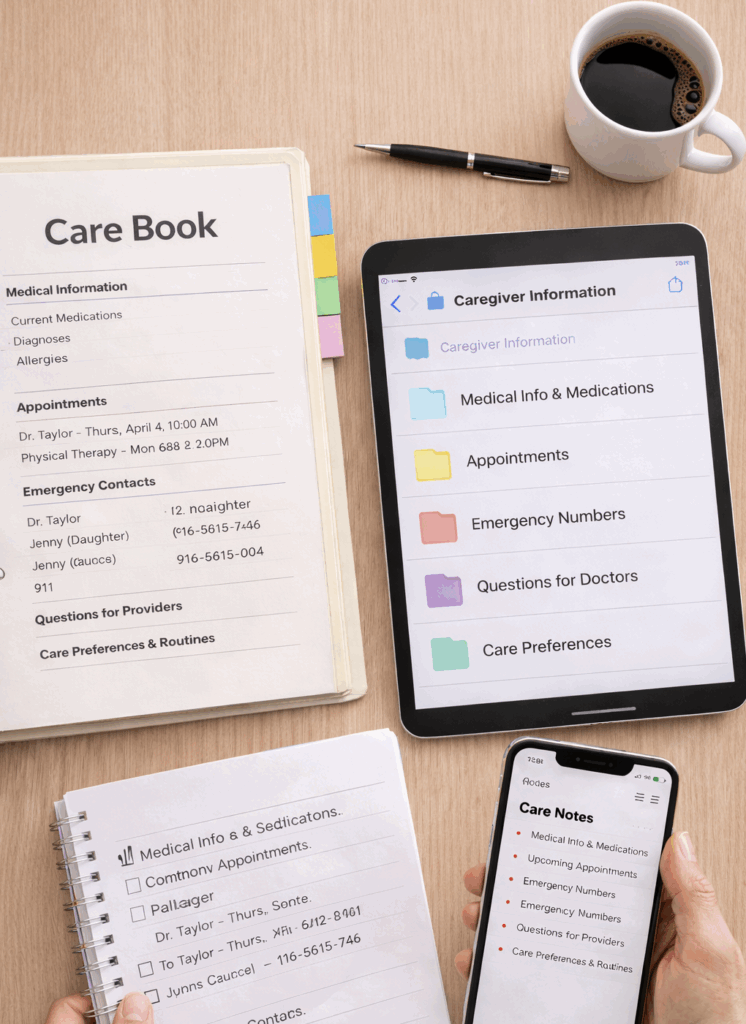
For care providers, encouraging families to maintain a single source of truth can significantly improve communication and reduce confusion during transitions.
2. Build Gentle Daily Routines Instead of Rigid Schedules
Caregiving rarely follows a perfect timeline. Energy levels change. Appointments run late. Moods shift.
Instead of strict schedules, focus on flexible routines.
Examples might include:
Morning rhythm: medications, hydration, brief mood check-in
Midday reset: meals, light activity, rest
Evening wind-down: comfort routines, reflection, notes for tomorrow
Routines create structure without pressure. They also make it easier for other family members or respite caregivers to step in, because expectations are clear and repeatable. For caregiver stress management, predictability reduces anxiety—even when circumstances feel uncertain.
3. Use Simple Checklists for Repeating Tasks
When stress is high, memory is often the first thing to suffer. That does not mean you are failing. It means your brain is overloaded.
Checklists remove the burden of remembering everything.
Helpful examples:
- Weekly medication refill check
- Monthly supply restocking
- Appointment preparation checklist
- Home safety review
- Questions for upcoming doctor visits
Keep them short. Keep them realistic. A checklist should support you, not overwhelm you. Over time, these small tools build confidence and reduce daily decision fatigue.
4. Establish Clear Communication Systems
Miscommunication can quickly add emotional strain, especially when multiple people are involved in care.
A simple communication plan can reduce unnecessary stress.
Consider:
- One shared group text for updates
- A designated contact person for providers
- Weekly family check-ins
- Written summaries after appointments
- A shared calendar everyone can access
When communication feels organized, caregivers feel less alone. And when providers communicate clearly and consistently, families feel more reassured and supported.
Clear communication is a powerful part of caregiver stress management because it reduces uncertainty and emotional tension.
5. Design “Low-Energy” Systems for Hard Days
Some days will be harder than others. Illness, poor sleep, emotional setbacks, or unexpected changes can make even simple tasks feel heavy.
Planning for those days in advance is an act of compassion toward yourself.
Ask:
What can be simplified when I am exhausted?
What decisions can be made ahead of time?
Who can I call if I need backup?
Examples:
- Pre-planned easy meals
- A short “call list” of trusted helpers
- Comfort routines that calm both you and your loved one
- Permission to pause non-essential tasks
Caregiver stress management is not about having energy every day. It is about building systems that support you on your lowest-energy days.
6. Build in Small Moments of Relief
Systems should not only focus on tasks. They should also protect the caregiver. Even small, consistent habits can help reduce caregiver stress over time:
- A daily five-minute quiet break
- Stepping outside for fresh air
- Drinking water before the next task
- Listening to calming music during routines
- Writing down one thing that went well
These moments may seem small, but they build emotional resilience. Over weeks and months, small supports add up.
You deserve care, too.
How Care Providers Can Support Caregiver Stress Management
Care providers are often the steady presence families lean on during uncertain and emotional seasons. When caregivers feel overwhelmed, thoughtful guidance from a trusted professional can make daily life feel more manageable.
There are simple, meaningful ways providers can support caregiver stress management:
- Offer clear, written summaries after visits so families do not have to rely on memory alone
- Share practical checklists or gentle routine templates that reduce daily decision fatigue
- Acknowledge that caregiving carries emotional weight and normalize those feelings
- Encourage realistic expectations about progress, recovery, and limitations
- Recommend trusted community resources, such as the Family Caregiver Alliance (caregiver.org), which offers education and support tools for family caregivers
Small gestures of clarity and reassurance can dramatically lower stress levels. When families feel guided instead of judged, they become more confident, more engaged, and better able to sustain care over time.
Supporting caregiver stress management is not simply compassionate. It strengthens communication, builds trust, and improves outcomes for everyone involved—the caregiver, the provider, and most importantly, the person receiving care.
A Final Thought
Caregiving is not about perfection. It is about sustainability. Caregiver stress management begins with creating enough structure so you can breathe, rest, and focus on what truly matters—your loved one and your own well-being.
Simple systems are not signs of weakness. They are signs of wisdom.
If you feel overwhelmed, start small. Choose one area of your day and create one simple system. That one step can bring more peace than you might expect. And remember, you do not have to figure everything out on your own.
If part of your stress comes from searching for the right support—whether that is home health care, assisted living, memory care, or another service—having reliable information in one place can make a meaningful difference. At longtermcarefinder.com, families can explore care options clearly, compare services, and connect directly with providers—without pressure or referral fees.
The right systems at home matter. So does the right support around you. Because everyone deserves good care. We help you find it.